







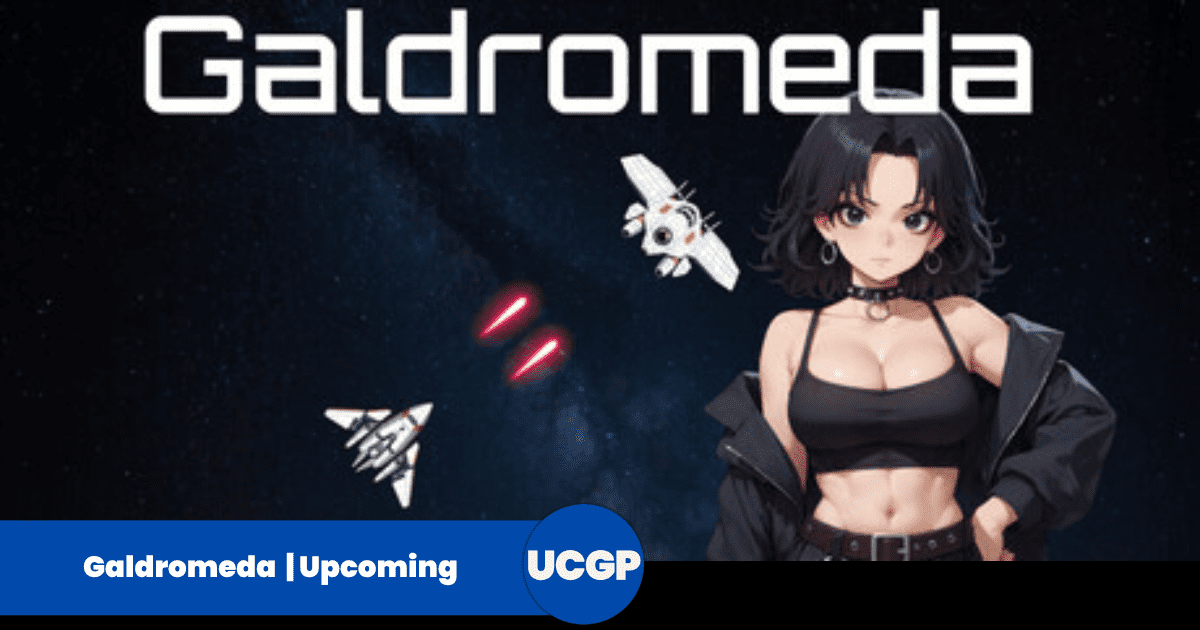

Galdromeda Release Date, Gameplay, and Complete Guide (2026)
Written by Qamar Shahzad, a gaming journalist with 15+ years of industry experience. Published June 2026.
Quick Facts
| Detail | Info |
|---|---|
| Game Name | Galdromeda |
| Developer | rediskdev |
| Publisher | rediskdev |
| Genre | Sci-Fi Turn-Based RPG |
| Release Date | July 16, 2026 |
| Platform | PC (Steam) |
| Campaign Length | Approximately 5 Hours |
| Max Character Level | 30 |
| Recruitable Crew | Up to 8 Members |
| Star Systems | 8 |
| Multiplayer | None (Single-Player Only) |
| Controller Support | Full Controller Support |
| Demo | Available on Steam |
| Price | Not Yet Announced |
Introduction
There is a very specific kind of indie RPG that makes no promises it cannot keep. It is compact, personal, visually distinctive, and built around a core idea that a small team found genuinely interesting rather than commercially calculated. Galdromeda, developed and self-published by rediskdev, is that kind of game. It releases on PC via Steam on July 16, 2026, and it is aiming to deliver a focused sci-fi turn-based RPG experience about commanding a stranded spaceship, recruiting crew members, and exploring an unknown galaxy to find your way home.
Before anything else, it is worth being upfront about scope: the campaign clocks in at around five hours. That is not a criticism leveled at Galdromeda specifically, but it is the most important piece of information for someone deciding whether this is the right purchase. This is a compact, focused RPG experience rather than a sprawling sixty-hour adventure, and understanding that sets appropriate expectations for everything else in this guide.
What Galdromeda brings to that compact runtime is an anime-inspired 2D visual style; tactical turn-based combat built around skill synergies and enemy weaknesses; up to eight recruitable crew members with individual progression; eight star systems to explore; and a ship customization layer that adds persistence to the overall adventure. Whether that package justifies the price tag, once it is confirmed, is the question the demo on Steam can help you answer before committing.
Why Galdromeda Matters
Galdromeda is not a high-profile release. Rediskdev is a small independent developer with limited marketing reach, and the game’s current visibility reflects that. But there is a consistent audience for focused, well-crafted indie tactical RPGs that do not need a hundred-hour campaign to deliver a satisfying experience.
The sci-fi setting in turn-based RPGs is underrepresented compared to fantasy alternatives. Most tactical RPGs default to medieval fantasy, which makes a crew-and-spaceship structure immediately distinctive, even before the specific mechanics are evaluated. For players who have worked through the standard fantasy tactical RPG library and want something that feels spatially and thematically different, the setting alone creates genuine interest.
The crew synergy system, where different crew combinations create tactical interactions during combat, is the mechanic most likely to drive replay interest beyond the single campaign playthrough. Discovering powerful combinations and rebuilding a run with different crew compositions is the kind of organic motivation that keeps compact games feeling longer than their runtime suggests.
The anime-inspired art style also gives the game a clear visual identity in a genre where stylistic choices often get blurred between releases. For players who gravitate toward that aesthetic, Galdromeda’s presentation will read as deliberate and appealing rather than generic.
Game Overview
| Category | Details |
|---|---|
| Full Title | Galdromeda |
| Developer | rediskdev |
| Publisher | rediskdev |
| Franchise | Standalone IP |
| Genre | RPG, Tactical RPG, Sci-Fi RPG, Turn-Based RPG |
| Game Type | Single-Player RPG, Space Adventure, Turn-Based Combat RPG |
| Engine | Not Officially Confirmed |
| Game Modes | Single-Player Only |
| Platforms | PC (Steam) |
Rediskdev is self-publishing Galdromeda, handling both development and distribution independently. No official social media accounts beyond the Steam store presence have been confirmed, which is consistent with a very small team focused on the game itself rather than a broad marketing operation. Steam remains the primary hub for official updates, demo access, and launch information.
Confirmed Information
Here is what is officially confirmed about Galdromeda based on available sources:
- PC release confirmed via Steam on July 16, 2026
- Single-player only, with no multiplayer, co-op, or PvP features
- Turn-based tactical combat with skill synergy mechanics, enemy weaknesses, and timed dodge mechanics
- Up to eight recruitable crew members, each with individual skill trees
- Eight explorable star systems
- Ship passive skill tree separate from crew character progression
- Character leveling up to maximum level 30
- Campaign length of approximately five hours
- Outfit collection system for character customization
- Trinket equipment system
- Ship circuits as an upgrade category
- Semi-open galaxy exploration across multiple star systems
- Anime-inspired 2D top-down visual style
- Full controller support confirmed
- Steam Cloud support confirmed
- Family Sharing support confirmed
- Demo available on Steam
- No Early Access period announced
- No delays announced
- No microtransactions announced
- Minimum system requirements published (see System Requirements section)
Rumors and Unconfirmed Details
Galdromeda has limited public information beyond what the Steam store page provides, so the list of unconfirmed items is relatively broad:
- Pricing: Not yet announced. Players should check the Steam page directly for confirmed pricing.
- Console ports: Not confirmed. Nothing suggests this is planned or ruled out.
- DLC or future content expansions: Not officially addressed.
- Recommended system requirements: Only minimum specs have been published.
- Official trailer: No official trailer has been confirmed. Available media consists of Steam screenshots and demo access.
- Post-launch support plans: Not detailed by the developer.
- Epic Games Store or other platform availability: Not confirmed beyond Steam.
Rumor Reliability: Low. There are no significant leaks or developer hints about future content. Open questions here reflect genuinely sparse public information rather than active community speculation.
Confirmed vs. Rumored Table
| Confirmed | Rumored |
|---|---|
| July 16, 2026 PC Steam release | Console ports |
| Single-player turn-based RPG | Post-launch DLC |
| Up to 8 crew members | Additional star systems |
| 8 star systems | Extended campaign content |
| Approximately 5-hour campaign | Additional crew members |
| Maximum level 30 | Pricing details |
| Full controller support | Recommended system requirements |
| Steam Cloud and Family Sharing | Official trailer |
| Demo available | Epic Games Store |
| No multiplayer | Sequel or expanded version |
Release Date and Timeline
Galdromeda’s public development and announcement history is minimal, reflecting a small studio working with limited marketing infrastructure.
Key timeline:
- Pre-launch: Steam store page goes live with screenshots and demo access
- Steam page update: July 16, 2026, confirmed as the official release date alongside demo availability
- July 16, 2026: Full game launches worldwide on Steam
There is no known announcement event, press reveal, or marketing campaign beyond the Steam presence. No delays have been announced. The demo’s availability before launch is the most meaningful pre-release communication tool the developer has used, giving players direct access to evaluate the game before purchase.
The five-hour campaign length is a genuinely important consideration for evaluating the release date’s significance. This is not a game players will spend months waiting to clear. It is a focused weekend experience, and the July 16 date should be understood in that context.
Platform Availability
Galdromeda is confirmed exclusively for PC via Steam.
| Platform | Status |
|---|---|
| PC (Steam) | Confirmed, July 16, 2026 |
| Epic Games Store | Not Confirmed |
| PlayStation | Not Confirmed |
| Xbox | Not Confirmed |
| Nintendo Switch | Not Confirmed |
| Mobile | Not Confirmed |
| Cloud Gaming | Not Confirmed |
| Crossplay | Not Applicable |
| Cross-Progression | Not Applicable |
The full controller support listed on Steam makes Galdromeda potentially a reasonable Steam Deck candidate, though official deck compatibility has not been confirmed. Given the turn-based nature, anime-inspired 2D presentation, and minimal hardware requirements, the technical compatibility should be strong even if formal Deck Verified status has not been applied for.
Gameplay Deep Dive
Galdromeda’s gameplay loop is built around three interconnected pillars: crew management, tactical combat, and galaxy exploration. These three systems feed each other across the game’s runtime in ways that give the compact campaign more mechanical texture than a single system alone could provide.
The central narrative hook, “Your ship is stranded in an unknown galaxy, and you are recruiting a crew to find your way home,” gives the exploration a clear purpose that motivates each star system visit beyond pure curiosity. Every system you explore is potentially a step toward returning, and every crew member recruited is another tactical option to evaluate and develop.
The top-down perspective and anime-inspired visual style give the moment-to-moment navigation a clear, readable aesthetic that communicates the game’s tone before any text description could.
Crew System
Eight recruitable crew members is a meaningful roster for a five-hour RPG. Character slots are limited, but the combination choices create genuine build decisions about who to bring and how to develop them. Each crew member has their own skill tree, which means the RPG progression layer extends to multiple characters rather than focusing solely on the player character.
The crew synergy mechanics during tactical combat are the highest-ceiling feature here. When different crew members’ skills interact to create advantageous combinations, it creates the kind of emergent tactical satisfaction that makes compact RPGs feel replay-worthy. Finding a synergy you did not use on your first playthrough and rebuilding your crew composition around it is exactly the incentive that drives multiple runs in games of this type.
Outfit collection and trinket equipment give crew customization a secondary layer beyond pure skill investment, adding visual personalization and stat-affecting equipment choices.
Ship Progression
The ship passive skill tree represents a separate progression system from crew character leveling, giving players a persistent upgrade path focused on the spaceship itself rather than individual crew members. Ship circuits as an upgrade category suggest the ship’s systems can be modified and enhanced across a playthrough.
This dual progression structure, individual crew growth and ship-level improvement, creates a broader character-development framework than a single skill tree could offer within the game’s scope.
Combat System
Combat in Galdromeda is turn-based and tactical, built around skill synergies, enemy weakness exploitation, and timed dodge mechanics. The inclusion of timed dodges adds a real-time input element within the turn-based structure, creating active engagement during combat rather than purely strategic menu navigation.
Enemy weakness mechanics mean combat requires understanding what different enemy types are vulnerable to and adapting your skill usage accordingly, which is the kind of design that rewards attention and punishes mindless button-pressing. For players who enjoy dissecting encounter mechanics and optimizing their tactical approach, this depth matters even within the game’s compact runtime.
The lack of a roguelike or procedurally generated combat structure means encounters are designed rather than randomized, which suits a narrative-forward RPG more than a run-based survival format would.
Progression Systems
Character progression in Galdromeda runs through crew skill trees and the ship passive skill tree, with individual crew members leveling to a maximum of level 30. This level cap, within a five-hour campaign, means progression feels meaningful within each session rather than strung out across dozens of hours before characters feel competent.
The outfit collection system adds a cosmetic-but-meaningful layer that encourages players to engage with the world and its rewards beyond pure stat optimization. Trinket equipment gives build customization another axis alongside the skill tree choices.
Steam Cloud support means progression saves are preserved across devices, which is a small but appreciated quality-of-life addition for players who might play across multiple machines.
Open World Features
Galdromeda offers semi-open galaxy exploration across eight star systems rather than a traditional open world. Players navigate between systems via the spaceship rather than exploring a continuous ground-level open world, which suits the space setting and the tactical RPG format.
Eight star systems for a five-hour campaign gives each system a reasonable amount of dedicated content without feeling rushed or abandoned. Hidden discoveries are confirmed as exploration rewards, giving players who investigate thoroughly more of the game than players who move directly through story objectives.
Character Creation and Customization
Character customization in Galdromeda centers on crew selection, skill development, and equipment rather than traditional character appearance creation. Players control a captain whose identity is shaped by tactical choices, crew compositions, and equipment loadouts rather than a character creation screen at the start of the game.
The outfit collection system adds visual personalization for crew members, and trinket equipment gives each character a secondary customization layer that affects their performance in combat. This approach to character identity through gear and build decisions, rather than pre-game appearance customization, is appropriate for the RPG structure Galdromeda is built around.
Story and Setting
The core narrative follows your crew, stranded in an unknown galaxy far from home, working through eight star systems to gather allies, uncover galactic secrets, and ultimately find a path back. This is a classic “lost in space” premise executed in an RPG framework, where the journey matters as much as the destination.
For a five-hour RPG, the narrative does not have space for sprawling lore or extensive world-building, but the premise gives every star system visited a clear purpose within the larger story rather than feeling like disconnected episodic content. The crew recruitment angle means every new character added to the roster is a story beat as well as a tactical addition, giving the game’s character system narrative weight beyond pure mechanics.
The anime-inspired visual style reinforces the storytelling tone, communicating the game’s personality through its presentation rather than requiring extensive text-heavy exposition.
Trailer and Media Analysis
No official trailer for Galdromeda has been confirmed at the time of this writing. Available media consists of Steam screenshots and the playable demo, which together give potential buyers the clearest pre-purchase picture available.
The Steam screenshots showcase space combat sequences, crew management screens, character progression UI, and ship upgrade interfaces. The top-down perspective and anime-inspired art style are clearly communicated across the available visuals, giving players an accurate sense of the game’s presentation before they download the demo.
For a release of this scale and visibility, the demo is doing the heaviest lifting as a marketing tool. Players curious about whether Galdromeda’s combination of tactical combat, crew building, and space exploration suits their preferences have a direct way to evaluate that without financial commitment.
Comparison With Similar Games
| Feature | Galdromeda | Star Renegades | Darkest Dungeon | FTL: Faster Than Light |
|---|---|---|---|---|
| Structure | Linear Campaign | Roguelike | Roguelike | Roguelike |
| Combat | Turn-Based (Synergy) | Turn-Based (Time Pressure) | Turn-Based (Attrition) | Real-Time Tactical |
| Setting | Sci-Fi Space | Sci-Fi Fantasy Hybrid | Gothic Horror | Sci-Fi Space |
| Campaign Length | ~5 Hours | Variable (Roguelike) | Variable (Roguelike) | Variable (Roguelike) |
| Crew System | 8 Recruitable Members | Procedural Companions | 4-Member Parties | 8 Crew Slots |
| Solo Focus | Yes | Yes | Yes | Yes |
| Anime Style | Yes | No | No | No |
| Price Tier | Indie Budget | Indie Mid | Indie Mid | Indie Budget |
Versus Star Renegades: Star Renegades shares the sci-fi setting and tactical turn-based combat but operates as a roguelike with procedurally generated encounters and permadeath mechanics. Galdromeda is a more linear, narrative-driven experience without the roguelike structure. Players who want a consistent, author-driven story with a fixed ending will find Galdromeda’s approach more satisfying than Star Renegades’s procedural format.
Versus FTL: Faster Than Light: FTL is the obvious genre touchstone for crew-managed spaceship games, but the comparison reveals meaningful differences. FTL is a roguelike built around procedural ship management and real-time-with-pause combat. Galdromeda is a narrative RPG built around character development and turn-based tactical encounters. They share a space crew premise and single-player focus, but the design philosophies are genuinely distinct.
Versus Battle Chasers: Nightwar: Battle Chasers is the closest structural comparison as a designed-encounter, anime-influenced tactical RPG with strong art direction and a defined party system. Both games prioritize visual personality and tactical depth within a contained narrative experience. Galdromeda’s space setting differentiates it thematically, while the crew recruitment structure gives it different character management dynamics than Battle Chasers’s fixed party composition.
Community Reactions
Community visibility for Galdromeda is genuinely limited at this stage, which reflects the game’s small development team, minimal marketing budget, and the inherent difficulty of breaking through in an increasingly crowded indie RPG market.
Reddit discussions in RPG and tactical strategy communities have been sparse, consistent with a small-profile release rather than a problem with the game itself. The players who have engaged with the Steam demo appear to respond positively to the crew synergy mechanics and the visual style, though comprehensive community impression data is not yet available.
YouTube coverage has been minimal, with the game not yet having significant traction among tactical RPG or indie game content creators. This will likely change in the days immediately before and after launch, when new-release coverage typically provides the initial wave of visibility for small titles.
Twitter and X visibility have similarly been limited, though the niche of players specifically looking for sci-fi turn-based RPGs with crew management has been discussing the game positively in smaller communities.
The community concerns that do surface center on three consistent areas: uncertainty about the developer given the limited public presence of rediskdev, the five-hour campaign length relative to expected pricing, and general content depth questions given how compact the confirmed feature set is. These are honest concerns worth factoring into a purchase decision rather than dismissing.
Overall sentiment from the players who have engaged with the demo has been positive, which is the most meaningful pre-launch signal available given the limited broader coverage.
Pros and Cons
Pros
- Crew synergy mechanics provide genuine tactical depth within the turn-based combat system
- The anime-inspired 2D visual style gives the game a distinctive and appealing aesthetic identity
- Eight recruitable crew members creates meaningful party composition choices
- The ship skill tree adds a progression layer separate from crew character development
- Full controller support opens the game to a broader play context
- A demo available before purchase removes financial risk from evaluating the game
- Steam Cloud and Family Sharing support added as quality-of-life features
- Very low hardware requirements make the game accessible on almost any PC
- No microtransactions
Cons
- An approximately five-hour campaign is genuinely compact and will be a dealbreaker for players expecting length
- No confirmed pricing makes pre-purchase value assessment difficult
- No official trailer means limited audiovisual marketing material for evaluating the experience
- A very small developer with limited public presence creates uncertainty about post-launch support
- Limited community visibility makes it harder to evaluate the game based on broader player feedback before launch
- No console versions confirmed
- No multiplayer for players who want a shared tactical RPG experience
Who Should Play Galdromeda
Strong fit for:
Tactical RPG fans are looking for something compact and completable across a weekend session rather than a months-long commitment. Players drawn to anime-inspired art styles in the sci-fi setting specifically. Anyone interested in crew management and synergy-based tactical combat who wants to try a different genre framing than the standard fantasy alternatives. Players who have already downloaded the demo and found the combat and visual style appealing.
Might want to wait or pass if:
You need a long campaign to justify an RPG purchase, since the five-hour runtime is genuinely short. You want confirmed pricing before evaluating whether the value proposition works for your budget. You are specifically looking for multiplayer or co-op tactical RPG gameplay. You prefer games from established developers with proven post-launch support track records.
System Requirements
Minimum system requirements for Galdromeda have been officially published. Recommended specifications have not been confirmed, so the table below includes estimates for that tier. These estimates are based on the anime-inspired 2D visual style and comparable indie tactical RPG releases. Clearly labeled as estimates where applicable.
| Minimum (Official) | Recommended (Estimated) | |
|---|---|---|
| OS | Windows 10 or newer | Windows 10 / 11 64-bit |
| CPU | Dual-Core 2.8GHz | Quad-Core 3.0GHz |
| RAM | 4GB | 8GB |
| GPU | 1GB VRAM | GTX 950 or equivalent |
| Storage | 1GB | 1GB |
| Ray Tracing | No | No |
| DLSS / FSR | Not Confirmed | Not Confirmed |
| Controller | Full Support Confirmed | Full Support Confirmed |
| Ultrawide | Not Confirmed | Not Confirmed |
The 1GB storage requirement is extremely minimal, and the overall hardware demands reflect a game designed to run on a very wide range of PCs. Virtually any gaming PC or capable mid-range laptop from the last five to six years should handle Galdromeda without difficulty, which supports the game’s accessibility for players without high-end hardware.
Expert Predictions
Looking at Galdromeda’s profile and how comparable small-scale indie tactical RPGs have performed, a few things seem likely. These are clearly speculative observations rather than confirmed information.
Launch visibility will depend heavily on how much organic traction the game builds in the week surrounding release. Small indie tactical RPGs that connect with the right creator community can find audiences well beyond their initial marketing reach. Whether Galdromeda finds that moment of visibility will largely determine how many players discover it in its launch window.
The five-hour campaign length will likely price the game into a specific budget tier once pricing is confirmed. Expect community pricing discussions to center on whether the crew system’s depth and replay potential justify the cost for the runtime provided.
Post-launch updates adding crew members, star systems, or extending the campaign would be the most natural path for the developer if the initial release performs well enough to justify continued investment. This is speculation about a future possibility, not anything Rediskdev has indicated.
Controller support being confirmed alongside the game’s compact scope makes Steam Deck usage an appealing prospect, and an official Deck compatibility check post-launch seems like a reasonable expectation once the developer has resources to pursue it. Again, this is speculation.
The crew synergy system has the highest ceiling for community discussion and guides, since the combination space for eight characters creates enough build theory to sustain a small but dedicated discussion community even if broader visibility remains limited.
FAQ Section
What is the release date for Galdromeda? Galdromeda releases on July 16, 2026, on PC via Steam.
Is Galdromeda coming to Steam? Yes. Galdromeda is confirmed for PC release exclusively via Steam, with a demo also available on the platform before launch.
How many crew members can you recruit in Galdromeda? Up to eight crew members can be recruited across the game’s eight star systems.
Is Galdromeda a turn-based RPG? Yes. Galdromeda is a turn-based tactical RPG featuring skill synergy mechanics, enemy weaknesses, and timed dodge inputs within the turn-based structure.
Does Galdromeda have character customization? Yes. Galdromeda includes crew skill tree progression, an outfit collection system for visual customization, and a trinket equipment system that affects character stats.
What are the PC requirements for Galdromeda? Minimum confirmed requirements are Windows 10 or newer, a dual-core 2.8GHz processor, 4GB RAM, 1GB VRAM GPU, and 1GB of storage. Recommended specifications have not been officially published.
Does Galdromeda support controllers? Yes. Full controller support is confirmed on the Steam store page.
Is Galdromeda multiplayer? No. Galdromeda is a single-player-only game with no multiplayer, co-op, or PvP features.
Final Verdict
Galdromeda is a compact, focused sci-fi tactical RPG that knows what it is trying to be. A five-hour crew management adventure with anime-inspired visuals, turn-based combat built around synergy and enemy weaknesses, eight star systems to explore, and a ship skill tree layered alongside individual crew progression. For players who enjoy tight, well-defined indie RPG experiences rather than sprawling open-world commitments, that proposition has genuine appeal.
The most important honest assessment is about scope. If five hours of campaign is too short for the price point, whatever that price point turns out to be, no amount of tactical depth changes that calculation for individual buyers. Try the Steam demo before purchasing to verify whether the combat feel and visual style suit your preferences, and evaluate the confirmed price against the runtime with realistic expectations.
For the niche of players specifically looking for a sci-fi tactical crew RPG with anime aesthetics and a clean, completable structure, Galdromeda on July 16, 2026, is worth putting on your radar. The demo is the smartest way to arrive at your own answer before launch day.
One response to “Galdromeda 2026: Release Date & RPG Guide”
[…] Galdromeda 2026: Release Date & RPG GuideJune 22, 2026 […]