







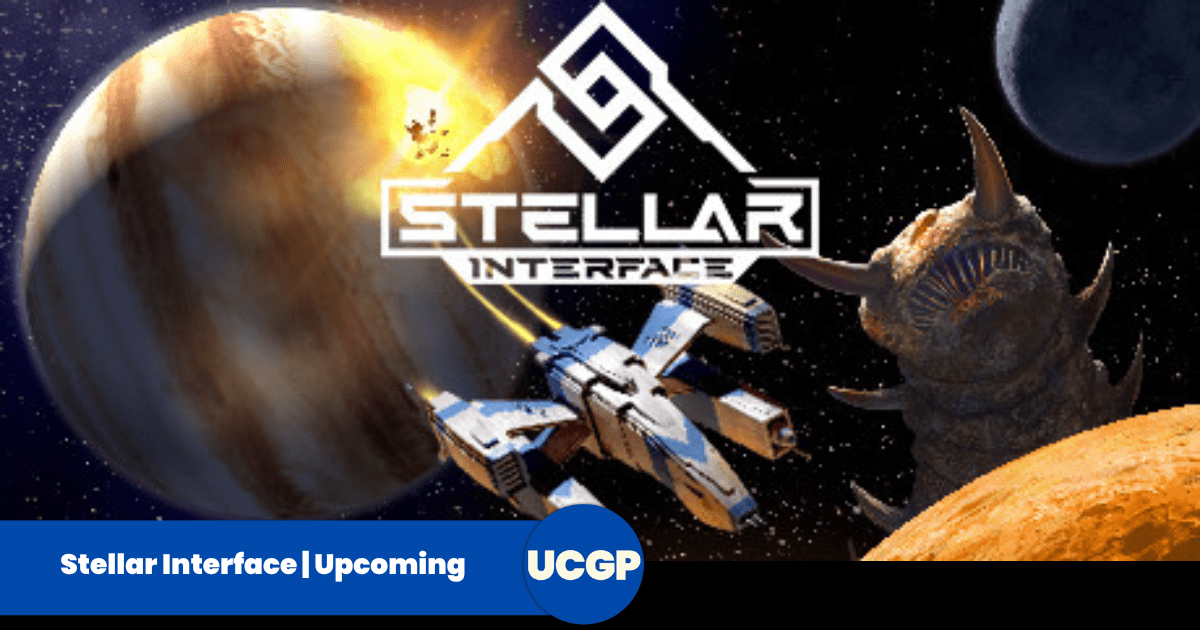

Stellar Interface (2026): Platforms, Gameplay, Xbox Release, Review and Complete Guide to This Roguelike Space Shooter
By: Qamar Shahzad | Gaming Journalist, 15+ Years Experience | Published June 2026
Quick Facts
| Detail | Info |
|---|---|
| Game Name | Stellar Interface |
| Developer | ImaginationOverflow |
| Publisher | ImaginationOverflow |
| Original PC Release | November 21, 2016 |
| Platforms | PC, Xbox One, Xbox Series X/S, PS4, PS5, Nintendo Switch |
| Genre | Roguelike, Bullet Hell, Shoot Em Up, Indie |
| Multiplayer | None Confirmed |
| Engine | Unity |
| Price | Historically around $12.99 USD |
| Permadeath | Yes |
| Controller Support | Yes |
Introduction
Not every great game gets the attention it deserves when it launches. Some games quietly build a loyal following over years, picking up new platforms and new players long after their original release date has faded from most people’s memory. Stellar Interface is exactly that kind of game.
Originally released on PC back on November 21, 2016, Stellar Interface is a roguelike space shooter from ImaginationOverflow that combines bullet-hell combat, procedurally generated galaxy exploration, ship customization, and deep perk synergy systems into a fast-paced arcade package. Nearly a decade later, the game continues to find new audiences through its availability across PC, Xbox One, Xbox Series X/S, PlayStation 4, PlayStation 5, and Nintendo Switch.
This is not a new game launching in 2026. It is worth being upfront about that. What this article covers is everything worth knowing for players discovering Stellar Interface now, in 2026: how the gameplay holds up, which platforms offer the best experience, how it compares to the roguelike shooters that came after it, and whether it deserves a spot in your library nearly ten years after its original release.
Why Stellar Interface Still Matters in 2026
The roguelike genre has exploded since 2016. Hades redefined what narrative integration in roguelikes could look like. Enter the Gungeon became a cult classic. Dead Cells pushed the format into action platforming. Against that backdrop, an indie space shooter from 2016 might seem like it would have been forgotten.
It has not been. Stellar Interface maintains a mostly positive Steam rating years after launch, which in the indie space is a meaningful signal. Games with shallow systems or repetitive loops tend to see their reputations decline over time as players move on to newer alternatives. Games that maintain positive sentiment years later usually have something genuinely well-designed at their core.
For Stellar Interface, that something is the perk synergy system. The depth of combinations between weapon modifiers, ship upgrades, and randomized perks creates the kind of build variety that roguelike fans specifically seek out. The community discussions around the game consistently focus on discovering powerful perk combinations, which is exactly the kind of engagement that keeps a roguelike alive in player conversations long after release.
The continued platform expansion to Xbox Series X/S, PS5, and Nintendo Switch reflects a developer who has supported the game’s accessibility over time rather than treating it as a one-and-done PC release. For players who missed it in 2016 and are now encountering it on modern console hardware, this represents a genuinely solid entry point into the roguelike shooter genre at an accessible price point.
Journalist Note: After covering indie games for many years, the ones that maintain positive community sentiment for the better part of a decade are rare and worth paying attention to. Most indie games have a launch window and then fade. Stellar Interface’s continued presence in roguelike community discussions suggests it earned a permanent place in that genre’s collective library rather than a passing mention.
Stellar Interface Game Overview
| Field | Details |
|---|---|
| Full Title | Stellar Interface |
| Developer | ImaginationOverflow |
| Publisher | ImaginationOverflow |
| Genre | Action, Roguelike, Shoot Em Up, Bullet Hell, Indie |
| Game Type | Roguelike Space Shooter, Bullet Hell |
| Engine | Unity |
| Series | Standalone IP |
| Original Release | November 21, 2016 |
| Multiplayer | None Confirmed |
| Platforms | PC, Xbox, PlayStation, Switch |
ImaginationOverflow developed and self-published Stellar Interface using the Unity engine. As a standalone IP with no prior entries or sequels, the game has existed as a single, continuously supported product since 2016 rather than spawning a franchise. The studio’s approach has been steady platform expansion and ongoing balance updates rather than aggressive content expansion through DLC.
The retro pixel-art visual style was a deliberate choice that has aged well. Pixel art does not suffer from the same dated feeling that early 3D games from the same era often do, which is part of why Stellar Interface remains visually appealing in 2026 in a way that some 2016 3D indie games do not.
Confirmed Information About Stellar Interface
Everything below is confirmed based on official sources and platform listings:
- Original PC release on November 21, 2016
- Developed and published by ImaginationOverflow
- Built using Unity Engine
- Available on PC via Steam, including Windows, Linux, and macOS
- Available on Xbox One and Xbox Series X/S
- Available on PS4 and PS5
- Available on Nintendo Switch
- Procedurally generated galaxy exploration
- Bullet-hell twin-stick shooter combat
- Roguelike progression with permadeath
- Multiple unlockable spacecraft
- Randomized perk and consumable systems
- Controller support confirmed
- Single-player experience, no confirmed multiplayer
- Steam Early Access used prior to full release
- Physical editions released through publishing partners
- Historically priced around $12.99 USD
Rumours and Unconfirmed Details
There are no significant credible leaks or rumors around Stellar Interface, which is typical for an established game nearly a decade past its original release. The following remains unconfirmed:
- Crossplay support between platforms
- Cross-progression between platforms
- Future content expansions or new ships
- Multiplayer or co-op additions
- Exact recommended PC system requirements
- Specific console performance targets beyond general 60 FPS expectations
Rumor reliability is low. Most community discussion treats the game as a stable, complete product rather than something with active development announcements pending.
Stellar Interface Confirmed vs. Rumored Table
| Confirmed | Rumoured or Unconfirmed |
|---|---|
| Original PC release November 21, 2016 | Crossplay support |
| Available on PC, Xbox, PlayStation, Switch | Cross-progression |
| Roguelike bullet-hell gameplay | Future content expansions |
| Procedural galaxy generation | Multiplayer or co-op additions |
| Multiple unlockable ships | New ships post-2026 |
| Permadeath progression system | Specific console FPS targets |
| Controller support | Recommended PC specifications |
| Unity Engine confirmed | Future physical edition expansions |
| Single-player only | DLC roadmap |
Stellar Interface Release Date and Platform Timeline
Stellar Interface originally released on PC on November 21, 2016, following a period in Steam Early Access. This is the foundational release date for the game, and it is important context for anyone encountering Stellar Interface for the first time through console listings in 2026.
Since that original release, ImaginationOverflow has expanded the game’s availability across additional platforms over time. PS4 and PS5 versions, Xbox One and Xbox Series X/S versions, and a Nintendo Switch version have all become available, with the Xbox Series X/S listing showing continued visibility in the Xbox ecosystem around June 2026.
It is worth being clear and accurate here: this is not a new game launch in 2026. It is a continued availability and platform support story for an established 2016 indie title. No delays are relevant to discuss because there is no pending new release. What matters for players in 2026 is which platform offers the best version of an already complete and polished game.
Stellar Interface Trailer
Stellar Interface Platform Availability
| Platform | Status |
|---|---|
| PC via Steam (Windows, Linux, macOS) | Available |
| Xbox One | Available |
| Xbox Series X/S | Available |
| PS4 | Available |
| PS5 | Available |
| Nintendo Switch | Available |
| Mobile | Not Confirmed |
| Epic Games Store | Not Confirmed |
| Cloud Gaming | Not Confirmed |
Stellar Interface has one of the broadest platform footprints an indie roguelike shooter from 2016 could realistically achieve. Covering PC across three operating systems, both current and previous-generation Xbox and PlayStation consoles, and Nintendo Switch means the game is genuinely accessible regardless of what hardware you own.
Crossplay and cross-progression have not been officially confirmed. For a single-player game with no multiplayer component, crossplay is not particularly relevant. Cross-progression between platforms would be a nice convenience for players who own multiple devices, but its absence is not a significant drawback for a roguelike where runs are typically self-contained sessions anyway.
Stellar Interface Gameplay Deep Dive
The Core Roguelike Loop
Stellar Interface follows the classic roguelike structure: each run takes you through a procedurally generated galaxy; you fight through enemy waves and bosses using bullet-hell combat mechanics; you collect perks and upgrades along the way; and permadeath means a loss sends you back to the start with whatever permanent unlocks you have earned along the way.
This loop is the foundation of the entire roguelike genre, and what separates good implementations from mediocre ones is the quality of the moment-to-moment combat and the depth of the build variety. Stellar Interface earns its positive reputation specifically because both of these elements are well executed.
Bullet-Hell Combat
The combat is twin-stick shooter style, with your spacecraft navigating dense enemy projectile patterns while returning fire. Bullet-hell design is a precise art: patterns need to be readable enough that skilled play can avoid them, but dense enough to create genuine tension and challenge. Getting this balance right is the difference between a bullet-hell game that feels fair and challenging versus one that feels unfair and frustrating.
The dodge-heavy movement system gives you the tools to navigate these patterns. Mastering ship movement and projectile reading is the skill progression that experienced players develop over repeated runs, independent of the build-based progression that roguelikes also offer.
Ship Customization and Unlocks
Multiple unlockable spacecraft give Stellar Interface meaningful variety between runs. Different ships presumably have different base stats, starting weapons, and playstyle implications. Unlocking new ships through roguelike progression gives players concrete goals beyond just surviving longer in any individual run.
Perk Synergies
The perk system is where Stellar Interface’s reputation for depth comes from. Randomized perks acquired during runs interact with each other and with weapon modifiers and consumables in ways that create distinct build identities. Finding a combination of perks that synergizes powerfully is the moment that defines a great roguelike run, and community discussions consistently highlight this as the game’s strongest feature.
The depth of these combinations is what gives the game its long-term replayability. Once you have unlocked all the ships and seen most of the procedural galaxy variations, the perk combination space is what continues to generate new and interesting runs.
Multiplayer and Co-op in Stellar Interface
Stellar Interface has no confirmed multiplayer or co-op features. It is a single-player roguelike experience across all platforms.
This is consistent with many roguelike shooters from its era and genre. Multiplayer roguelikes have become more common in recent years, with games like Risk of Rain 2 demonstrating how cooperative roguelike gameplay can work well. Stellar Interface predates that trend and was designed as a focused solo experience.
For players specifically looking for cooperative roguelike shooters in 2026, Stellar Interface is not that game. For players looking for a well-designed solo bullet-hell roguelike experience, the lack of multiplayer is simply the nature of the genre entry it represents.
Combat System in Stellar Interface
The combat system combines real-time twin-stick shooting with enemy wave management and boss encounters. Enemy AI patterns follow typical bullet-hell shooter conventions, with projectile patterns that escalate in complexity as you progress through the procedural galaxy.
Boss encounters represent the highest combat challenge points within each run. Surviving and defeating bosses requires both the build strength accumulated through perks and ship upgrades and the player skill in reading and dodging attack patterns. This dual requirement, build optimization plus mechanical skill, is the combat philosophy that makes bullet-hell roguelikes satisfying to master.
Progression Systems in Stellar Interface
Progression in Stellar Interface operates on two levels. Within each run, you collect perks, weapon modifiers, and consumables that build your specific run’s power level. Between runs, permanent unlocks, including new ships and presumably other meta-progression elements, persist regardless of individual run outcomes.
This dual-track progression is the standard structure for roguelikes that want to balance the tension of permadeath with the satisfaction of long-term advancement. Even a failed run contributes to your overall progress through unlocks, which keeps the permadeath mechanic from feeling purely punishing.
Galaxy Exploration and World Structure
Stellar Interface uses procedural galaxy map exploration rather than a fixed level structure. Each run generates a different galaxy layout, giving the game the variety that procedural generation provides while keeping the core combat and perk systems consistent.
This is not an open-world game in the traditional sense. It is a procedurally structured roguelike where exploration happens within the context of run-based progression rather than free-form world traversal. The galaxy map serves as the navigation framework for moving between encounters rather than as an explorable space in its own right.
Character and Ship Selection
Stellar Interface does not feature traditional character creation. Player expression comes through ship selection and the build decisions made during each run via perk and upgrade choices. The unlockable spacecraft roster gives players different starting points for their runs, with each ship presumably offering a different playstyle foundation.
This approach to player expression through build and ship choice rather than character customization is standard for the roguelike shooter genre and appropriate for a game where the gameplay systems are the primary focus.
Story and Setting of Stellar Interface
Stellar Interface has minimal narrative content. The premise involves progressing through a procedurally generated galaxy and defeating galactic overlords, but the game does not prioritize story delivery through dialogue, cutscenes, or narrative exposition.
This is a deliberate design choice common to arcade-focused roguelikes. The galaxy setting provides visual and thematic context for the bullet-hell combat and procedural exploration without requiring narrative investment from players who are primarily there for the gameplay loop. Players looking for a roguelike with strong narrative integration, in the style of Hades, will not find that here. Players looking for pure arcade space shooter action with roguelike structure will find exactly what the premise promises.
How Stellar Interface Compares to Similar Games
Versus Enter the Gungeon
Enter the Gungeon is one of the most beloved bullet-hell roguelikes, with its dungeon-crawling format and extensive weapon variety. Stellar Interface shares the bullet-hell DNA but moves the setting to space and focuses more heavily on perk synergies than weapon collection variety. Both games reward pattern reading and build optimization, but the specific genre dressing and progression focus differ.
Versus Nova Drift
Nova Drift is probably the closest direct comparison, as both are space-themed roguelike shooters with deep build customization systems. Nova Drift leans more into a build-crafting sandbox feel with its mod tree system. Stellar Interface offers a more traditional roguelike structure with ship unlocks and run-based perk acquisition. Players who enjoyed one should genuinely consider the other.
Versus Steredenn
Steredenn is another space-themed bullet-hell roguelike with a focus on weapon variety and fast-paced action. The comparison highlights how the space roguelike shooter subgenre has multiple strong entries, each with slightly different emphases on weapon systems versus perk systems versus ship customization.
Versus The Binding of Isaac: Rebirth
The Binding of Isaac: Rebirth is the genre-defining roguelike for many players, with its top-down dungeon format and enormous item pool. Stellar Interface operates in a different setting and combat style but shares the core philosophy of randomized item and perk pools, creating emergent build variety across runs. Isaac fans who want a space shooter twist on familiar roguelike satisfaction have a natural next step in Stellar Interface.
Comparison Table
| Game | Setting | Combat Style | Build Focus | Original Release |
|---|---|---|---|---|
| Stellar Interface | Space | Twin-Stick Bullet Hell | Perk Synergies | 2016 |
| Enter the Gungeon | Dungeon | Twin-Stick Bullet Hell | Weapon Variety | 2016 |
| Nova Drift | Space | Arena Shooter | Mod Tree Building | 2017 |
| Steredenn | Space | Side-Scrolling Shooter | Weapon Variety | 2015 |
| Binding of Isaac Rebirth | Dungeon | Top-Down Shooter | Item Synergies | 2014 |
Community Reactions to Stellar Interface
Reddit: Discussions around Stellar Interface tend to frame it as a hidden indie gem within roguelike communities. Players who discover it, often through Steam sales or console ports, frequently express surprise at the depth of the perk system relative to its low profile. The sentiment is consistently positive among those who have played it.
YouTube: Coverage is moderate and comes primarily from indie shooter and roguelike-focused creators rather than major gaming channels. Gameplay videos showcasing impressive perk combinations and boss fights are the most common content type.
Twitter/X: Limited but positive engagement, mostly from the indie game community and roguelike enthusiasts who have followed the game’s platform expansion over the years.
Discord: A small but dedicated community continues to discuss builds, ship preferences, and perk combinations. Small dedicated communities for roguelikes years after release are a sign of a game that earned genuine respect from the players who engaged with it deeply.
Most requested community features over time have included multiplayer, additional ships, and continued content updates. Community concerns center on repetitiveness over very long sessions and the minimal story content, both of which are honest trade-offs of the genre and design philosophy rather than execution failures.
Overall community sentiment remains positive years after release, reflected in the game’s continued mostly positive Steam rating.
Stellar Interface Pros and Cons
Pros
- Deep and rewarding perk synergy system that drives long-term replayability
- Available across PC, Xbox One and Series X/S, PS4 and PS5, and Nintendo Switch
- Accessible price point historically around $12.99 USD
- Light system requirements make it playable on a wide range of hardware
- Solid bullet-hell combat with fair and readable enemy patterns
- Multiple unlockable ships add build variety
- Controller support across all platforms
- Mostly positive Steam rating maintained years after launch
- No microtransactions or live service pressure
- Retro pixel-art style that has aged well visually
Cons
- No multiplayer or co-op for players who want social roguelike experiences
- Minimal narrative content for players who want story integration
- Repetitiveness over very long sessions is a noted community concern
- This is a 2016 game, not a new 2026 release, despite recent platform listing visibility
- Crossplay and cross-progression not available
- No active DLC roadmap or major content expansion plans announced
- Recommended PC specifications not clearly published
Who Should Play Stellar Interface
Stellar Interface is a strong fit if you:
- Enjoy bullet-hell roguelikes like Enter the Gungeon or Nova Drift
- Want deep perk and build synergy systems to experiment with
- Prefer arcade-style space shooter action over narrative-heavy games
- Are looking for an affordable, well-reviewed indie game on Xbox, PlayStation, or Switch
- Have light hardware requirements and want something that runs on almost anything
- Enjoy permadeath roguelike structures with meaningful meta-progression
Stellar Interface may not suit you if you:
- Need multiplayer or co-op as a core feature
- Want a roguelike with strong narrative integration like Hades
- Are looking for a brand new 2026 release rather than an established 2016 title
- Get fatigued by repetitive gameplay loops over extended sessions
- Need crossplay or cross-progression across multiple devices
Stellar Interface System Requirements
Official recommended specifications have not been clearly published, but the historical PC minimum requirements are well documented and reflect the game’s lightweight technical demands:
PC Requirements (Historical)
| Specification | Details |
|---|---|
| OS | Windows |
| CPU | Dual-core processor |
| RAM | 2 to 4 GB |
| GPU | DirectX-compatible graphics card |
| Storage | Approximately 1 GB or less |
| Controller | Yes |
| Ray Tracing | No |
These requirements reflect the game’s pixel-art visual style and 2016 technical foundation. Stellar Interface runs comfortably on hardware that would struggle with most modern AAA titles, which is a genuine advantage for players with older laptops or budget PCs.
On Xbox Series X/S and PS5, performance should comfortably reach 60 FPS given the lightweight technical profile, though specific console performance figures have not been officially detailed. Nintendo Switch performance is expected to be stable given the modest hardware demands of the pixel-art presentation.
Expert Predictions for Stellar Interface in 2026
Stellar Interface is not a game with major news-driven momentum heading into the rest of 2026. It is, instead, a stable and well-regarded indie title that continues to find new players through platform availability and roguelike community recommendations.
The most realistic expectation is continued steady discovery rather than any major resurgence. Games like this tend to have long tails: a small but consistent stream of new players finding them through Steam sales, console store browsing, or recommendations from roguelike-focused content creators and communities.
Whether ImaginationOverflow adds new content, ships, or even multiplayer at this point in the game’s lifecycle is speculative. Nearly a decade after original release, major content additions to an established indie title are less common, though not unheard of if a developer remains engaged with their community.
For players in 2026 specifically searching for what is available on Xbox Series X/S or other current platforms, Stellar Interface represents a low-risk, high-quality option in the roguelike shooter space. Its long-term reputation as a respected indie title within its niche is well-earned, and that reputation is unlikely to change significantly without some major new development.
Frequently Asked Questions About Stellar Interface
What is Stellar Interface? Stellar Interface is a roguelike space shooter that combines bullet-hell combat, procedural galaxy exploration, ship customization, and perk synergies. It originally released on PC on November 21, 2016, and is now available on PC, Xbox One, Xbox Series X/S, PS4, PS5, and Nintendo Switch.
Is Stellar Interface available on Xbox Series X/S? Yes. Stellar Interface is available on Xbox Series X/S as well as Xbox One, alongside its PC, PlayStation, and Nintendo Switch versions.
Does Stellar Interface have multiplayer? No. Stellar Interface is a single-player roguelike shooter. There is no confirmed multiplayer or co-op mode in any version of the game.
Is Stellar Interface a roguelike game? Yes. Stellar Interface is built around classic roguelike structure, including procedurally generated galaxies, permadeath, run-based perk acquisition, and persistent meta-progression through ship unlocks.
What platforms support Stellar Interface? Stellar Interface is available on PC via Steam for Windows, Linux, and macOS, on Xbox One and Xbox Series X/S, on PS4 and PS5, and on Nintendo Switch.
How long is a typical stellar interface run? Specific run length has not been officially detailed, but bullet-hell roguelikes of this type typically offer runs lasting somewhere between twenty minutes and an hour depending on player skill and how far you progress before a run ends.
Does Stellar Interface support controllers? Yes. Controller support is confirmed across all platforms, which fits naturally with the twin-stick shooter combat style.
Is Stellar Interface worth playing in 2026? For fans of bullet-hell roguelikes and arcade space shooters, yes. The game maintains a mostly positive Steam rating years after release, offers deep perk synergy systems with strong replayability, and is available at an accessible price point across nearly every modern gaming platform. It is not a new 2026 release, but its continued availability and positive community reputation make it a worthwhile pickup for genre fans who have not yet played it.
Final Verdict
Stellar Interface is a genuine example of an indie game that earned its staying power through solid design rather than marketing momentum. Originally released in 2016, it has quietly built and maintained a positive reputation within roguelike communities through deep perk synergy systems, fair and engaging bullet-hell combat, and a steady expansion across nearly every platform that matters: PC, Xbox, PlayStation, and Nintendo Switch.
It is important to be clear that this is not a new 2026 release, despite continued visibility in platform listings around this time. What it is, instead, is a nearly decade-old indie title that remains genuinely worth playing, particularly for players who have not yet discovered it and are now encountering it on Xbox Series X/S, PS5, or Switch for the first time.
The combat is fair. The perk combinations are deep. The price has historically been accessible. The system requirements are light enough to run on almost anything. For roguelike and bullet-hell shooter fans looking for a respected indie entry in the genre, Stellar Interface remains a recommendation worth taking seriously in 2026, nearly ten years after it first launched.
Written by Qamar Shahzad, a gaming journalist with 15+ years of industry experience. Published June 2026.
One response to “Stellar Interface (2026): Xbox, Switch, PS5 Platforms & Review”
[…] Stellar Interface (2026): Xbox, Switch, PS5 Platforms & ReviewJune 11, 2026 […]