







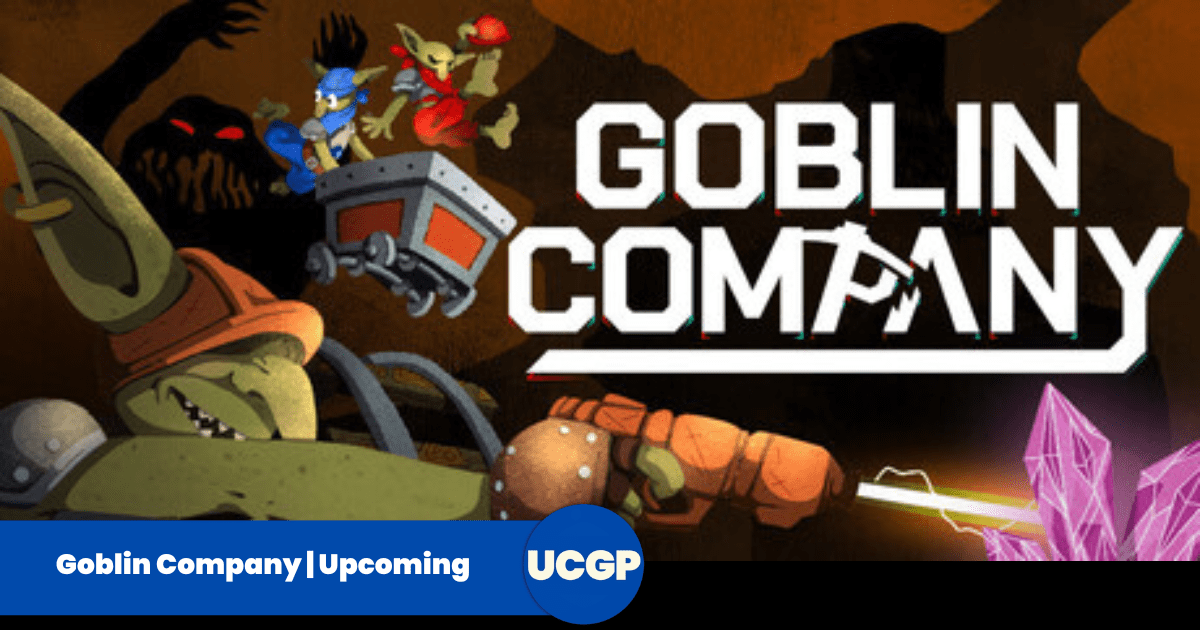

Goblin Company Review and Complete Guide (2026): The Co-op Mining Game Worth Digging Into
Written by Qamar Shahzad, a gaming journalist with 15+ years of industry experience. Published June 2026.
Quick Facts
| Detail | Info |
|---|---|
| Game Name | Goblin Company |
| Developer / Publisher | BitBorne Studio |
| Genre | Co-op Survival Mining Adventure |
| Release Date | June 12, 2026 |
| Platform | PC (Steam) |
| Price | $9.99 USD (Launch Discount: $7.99) |
| Co-op Players | Up to 4 (Online) |
| Engine | Unreal Engine |
| Single-Player | Yes |
| Biomes | 3 |
| Destructible Environments | Yes |
| Railway Building | Yes |
Introduction
There is a specific kind of co-op game that finds its audience almost immediately after launch. It does not need a marketing budget. It does not need a big name behind it. It just needs one person to share a clip of themselves laughing with friends while something chaotic happens underground, and suddenly everyone in their circle is buying it.
Goblin Company, developed and published by BitBorne Studio, launched on Steam on June 12, 2026, and it has that same energy. You and up to three friends play as goblin miners working for the decidedly suspicious WHAAG MINING INC., sent into dangerous underground caves to find the legendary Giant Crystal. Along the way you are drilling through destructible terrain, building railway systems to transport resources, fighting creatures lurking in the dark, and managing your goblins’ sanity as the darkness closes in.
In this guide I am covering everything you need to know about Goblin Company: the full gameplay breakdown, co-op details, how it compares to Deep Rock Galactic, system requirements, community reactions, and whether the $9.99 price tag delivers good value. Let’s get into it.
Why Goblin Company Is Getting Attention
The co-op survival genre has some deeply established titles at this point. Deep Rock Galactic set a high bar for underground co-op gameplay and built one of the most loyal communities in the indie space. So when a new game arrives in that same territory, it has to offer something genuinely different to stand out.
Goblin Company’s answer is the railway system. The idea of building a functional rail network through caves you are actively digging yourself is something no major competitor has committed to this strongly. You are not just mining for resources and fighting creatures. You are constructing infrastructure as you go, and that logistical layer changes how co-op teamwork feels in a meaningful way.
The goblin theme also adds a personality that separates the game visually and tonally from its peers. The humor around WHAAG MINING INC. and the goblin worker premise gives the game a playful, absurd quality that suits the chaos of four people trying to dig coordinated tunnels.
After covering the co-op survival space for years, I have seen plenty of games try to clone what Deep Rock Galactic did. The ones that succeed find their own hook and lean into it. Goblin Company has found its hook in the train-building mechanic, and the community response suggests that bet is paying off.
Game Overview
| Category | Details |
|---|---|
| Full Title | Goblin Company |
| Developer | BitBorne Studio |
| Publisher | BitBorne Studio |
| Series | Original IP |
| Genre | Action, Adventure, Survival, Co-op, Indie |
| Game Type | Co-op Survival Mining Adventure |
| Engine | Unreal Engine |
| Official Page | Steam Store |
BitBorne Studio is an independent developer, and Goblin Company represents their take on a genre that has a passionate and growing player base. The decision to self-publish keeps the creative direction fully in-house, which often shows in how responsive smaller studios are to community feedback. The improvements made between the public demo and the full launch already demonstrate that responsiveness in practice.
Confirmed Information
Here is what is officially confirmed about Goblin Company at the time of its June 12, 2026 launch:
- Released worldwide on Steam June 12, 2026
- discount,Standard price of $9.99 USD with a 20% launch discount bringing it to $7.99
- Up to 4-player online co-op supported
- Single-player mode available
- Three underground biomes to explore
- Fully destructible cave environments
- Railway construction system built into core gameplay
- Goblin character customization confirmed
- Dynamic darkness and anxiety survival mechanics
- Goblin technology upgrades and equipment progression
- Mining carts and rail transportation as movement options
- Controller support listed on Steam
- Goblin Company plus Soundtrack Bundle available
- The gameGame appeared on Steam Popular New Releases shortly after launch
- Developers made significant polish improvements based on demo community feedback
Rumors and Unconfirmed Details
Goblin Company is a fresh launch, so speculation outpaces official information in several areas:
- Console releases: No announcements for PlayStation, Xbox, or Nintendo Switch. Community members have requested console ports, but nothing from the developer side confirms this.
- Additional biomes: Three biomes are confirmed at launch, and players are hoping for more through future updates. No official roadmap has been shared yet.
- Major post-launch content expansions: The developer has not detailed any specific content update plans beyond the launch state.
- Steam Deck support: Not officially confirmed. Given the co-op nature and third-person controls, Steam Deck is a reasonable expectation, but the studio has not addressed it.
- Crossplay or cross-progression: No announcements on either front.
Rumor Reliability: Low. Most of the speculation around future content is community-driven wishlist territory rather than anything grounded in official statements.
Confirmed vs. Rumored Table
| Confirmed | Rumored |
|---|---|
| Steam PC launch June 12, 2026 | Console ports |
| Up to 4-player online co-op | Additional biomes |
| Fully destructible environments | Major content expansions |
| Three biomes at launch | Steam Deck optimization |
| Railway construction mechanics | Crossplay support |
| Goblin character customization | New creature types |
| Single-player support | Seasonal events |
| Goblin technology progression | PvP mode |
| 20% launch discount | Additional goblin cosmetics |
| Soundtrack bundle available | Free content updates |
Release Date and Timeline
Goblin Company kept its path to launch relatively clean. No prolonged Early Access cycle, no public delays, and a demo period that built community interest without requiring the team to manage years of ongoing expectations.
Key timeline moments:
- May 12, 2026: Release date officially announced
- Pre-launch: Public Steam demo available for players to test before buying
- Demo period: BitBorne Studio actively updated the demo based on community feedback, notably improving polish and usability
- June 12, 2026: Full game launches on Steam worldwide
- Launch week: 20% introductory discount applied, bringing the price to $7.99
The decision to release a demo and iterate on it before going to full launch is a healthy development approach, particularly for a co-op game where the multiplayer experience needs to feel smooth from day one. Player feedback during demo testing shaped several quality-of-life improvements that made it into the release build.
At $9.99 standard price, the barrier to entry is also low enough that players are less likely to wait for a sale before trying it.
Goblin Company Trailer
Platform Availability
Goblin Company is currently available exclusively on PC through Steam.
| Platform | Status |
|---|---|
| PC (Steam) | Available Now |
| Epic Games Store | Not Confirmed |
| PlayStation | Not Announced |
| Xbox | Not Announced |
| Nintendo Switch | Not Announced |
| Mobile | No Announcement |
| Cloud Gaming | Not Confirmed |
| Steam Deck | Not Officially Confirmed |
| Crossplay | Not Confirmed |
| Cross-Progression | Not Confirmed |
The game’s Unreal Engine foundation and third-person perspective controls would translate reasonably to controllers and potentially Steam Deck, but BitBorne Studio has not made any official statement about Deck support. Community members hoping for console versions will need to wait for future announcements.
Gameplay Deep Dive
Goblin Company puts you inside a fully destructible underground world and asks you and your team to figure it out together. The core loop involves descending into cave systems, mining resources, managing your goblins’ survival needs, fighting off underground creatures, and ultimately pushing toward the Giant Crystal objective.
What makes the experience feel different from similar co-op games is the layered responsibility each player has. Mining, building infrastructure, fighting creatures, and managing the darkness are all happening simultaneously. In a four-player session, natural task division emerges organically. Some players will dig while others build rail lines. Someone handles combat while another manages resources. That emergent teamwork is the heart of why co-op survival games in this space work so well.
Mining and Exploration
The fully destructible cave environments are central to how Goblin Company plays. You are not navigating a pre-designed dungeon. You are creating your own paths through rock, which means every playthrough produces a different underground map shaped by your team’s choices.
Laser drills and mining equipment let you carve through terrain efficiently. The three biomes each have distinct resource distributions and environmental challenges, which encourages teams to adapt their approach between runs rather than applying the same strategy everywhere.
Hidden resources reward players who explore off the main path, and the dynamic darkness mechanic means that venturing too far without proper torches and lighting carries genuine risk.
Railway Building
The railway construction system is the feature that most clearly separates Goblin Company from its competitors. You are physically placing rail track through tunnels you have dug, then using mining carts to transport resources across your network.
This mechanic adds a genuine logistics dimension to the game. A team that invests in infrastructure early can move resources far more efficiently later in a run. A team that ignores rail building in favor of pure mining may find themselves hauling resources the slow way when the caves get deeper and the distances grow.
For players who enjoy the organizational side of co-op games, this system alone justifies the purchase.
Multiplayer and Co-op
Goblin Company supports up to four players in online co-op, and the entire game is designed with that party size in mind. Single-player is available for those who want to go solo, and the game scales appropriately, but the co-op experience is clearly the intended way to play.
The cooperative design shows in how tasks naturally distribute across a team. In a well-coordinated group of four, you genuinely feel like a mining operation rather than just four people doing the same thing in the same cave. Someone takes point on creature threats while others focus on infrastructure and resources.
Community discussions on Discord have been active with players sharing co-op strategies, talking about role distribution, and organizing sessions. For a freshly launched indie game, that activity level is a positive early sign.
-focused.No PvP has been announced, and the game is entirely PvE focused. That suits the cooperative tone well.
Combat System
cooperativeCombat in Goblin Company is real-time and co-op oriented. Underground creatures pose environmental threats throughout your mining runs, and dealing with them requires team coordination rather than individual combat skill alone.
The combat does not appear to be the central pillar of the game. It serves as a pressure mechanism that interrupts mining operations and forces teams to respond. Creatures do not simply sit and wait for you to deal with them. They create the kind of emergent chaos that makes co-op survival games unpredictable and memorable.
The darkness mechanic adds to combat tension. Poor lighting management can leave your team vulnerable to creatures that are much harder to see and respond to in the dark. Managing torches and underground lighting is a survival priority, not just a comfort feature.
Progression Systems
Goblin Company’s progression centers on goblin technology upgrades and equipment improvements that build over the course of a session.
Laser drills, torches, and mining tools can all be upgraded through the technology system, and as your equipment improves, the efficiency and capability of your team grows. These upgrades are tied to resources gathered during the run, which creates a direct loop between effective mining and improved capability.
The shared co-op progression means that resource gathering benefits the whole team rather than individual players. That shared investment model keeps everyone engaged in the collective mission rather than creating competition over resources within the party.
Between sessions, goblin character customization allows players to personalize their miners, which adds identity to the experience even when the underground environments procedurally vary each time.
Open World and Environment
-worldGoblin Company does not offer a traditional open world. The underground environments are procedurally generated and shaped by the tunnels your team creates, which gives them a semi-open feel without the structure of a full open world design.
Three biomes provide distinct environments with different visual characteristics, creature types, and resource distributions. Having three biomes at launch gives players enough variety to explore across multiple sessions without the environments feeling repetitive immediately. The community has already requested additional biomes through future updates, which is a natural ask for a game built around replayability.
The dynamic darkness mechanic changes how exploration feels depending on how well your team manages lighting. Moving into an unlit section carries real tension. Establishing lit zones as you advance feels like genuine progress. This is a simple mechanic that does a lot of atmospheric work.
Goblin Character Customization
Goblin character customization is confirmed in Goblin Company. Players can personalize their miner goblin’s appearance, which adds identity to co-op sessions and helps distinguish players visually underground.
Specific customization options beyond appearance have not been fully detailed in official documentation. Given the game’s price point and the typical indie approach to cosmetics without microtransactions, customization is likely cosmetic rather than stat-affecting.
No microtransactions have been confirmed or rumored. The Goblin Company plus Soundtrack Bundle is the only premium product alongside the base game at this stage.
Story and Setting
The narrative framing of Goblin Company is more comedic premise than deep story, and that is entirely appropriate for the game’s tone. You work for WHAAG MINING INC., a corporation with a name that immediately tells you not to take it too seriously, and your job is to go underground and retrieve the legendary Giant Crystal.
The humor runs through the concept and the goblin characters themselves. Playing as goblin miners working for a suspiciously enthusiastic corporate employer gives the whole experience a lighthearted quality that pairs well with the chaotic reality of four players digging tunnels in all directions.
The story does not ask much of you beyond following the mission, which is the right call for a co-op survival game. The gameplay and the emergent moments your team creates are the real narrative here.
Comparison With Similar Games
| Feature | Goblin Company | Deep Rock Galactic | Lethal Company | Core Keeper |
|---|---|---|---|---|
| Co-op Players | 4 | 4 | 4 | 8 |
| Mining Focus | Central | Yes | No | Yes |
| Railway Building | Yes | No | No | No |
| Destructible Terrain | Yes | Yes | No | Yes |
| Price | $9.99 | $29.99 | $9.99 | $17.99 |
| Perspective | Third-Person | First-Person | Third-Person | Top-Down |
| Single-Player | Yes | Yes | Yes | Yes |
| Humor Tone | Goblin Comedy | Space Dwarf Comedy | Horror Comedy | Neutral |
Versus Deep Rock Galactic: The community comparison to Deep Rock Galactic is understandable and flattering for Goblin Company. Both are co-op underground survival games with distinct creature threats and cooperative mission structures. The biggest mechanical difference is the railway system, which Deep Rock does not have, and the perspective change from first-person to third-person. Deep Rock also has years of post-launch content behind it. Goblin Company is at the beginning of that journey, but the foundation looks solid.
Versus Lethal Company: The price point and player count are similar, but the gameplay loops are very different. Lethal Company is built around tension and horror comedy. Goblin Company is built around mining efficiency and infrastructure. They share a price point and co-op appeal but serve different moods.
Versus Core Keeper: Core Keeper is a top-down survival crafting game with deep building systems. Goblin Company is more action-focused with a cleaner objective structure. Both reward players who enjoy underground exploration co-op, but the experience feels quite different in practice.
The railway mechanic is Goblin Company’s genuine point of differentiation. After covering enough co-op survival releases over the years to see what separates the ones that stick from the ones that fade, having one clear mechanic that players talk about and share clips of is often the deciding factor.
Community Reactions
Goblin Company appeared on Steam’s Popular New Releases shortly after launch, which is a meaningful early signal. Making that list requires a combination of purchase volume and positive review activity, and the game earned both.
Reddit discussions have landed on “Deep Rock Galactic with goblins” as the quick summary, which the developers are probably fine with given how positively that comparison lands in the co-op community. The more specific discussions are happening around the railway mechanic and how different teams have approached infrastructure planning.
YouTube coverage has been coming primarily from indie-focused and co-op gaming creators. The visual nature of destructible cave mining and railway construction makes Goblin Company a strong content game. Clips of creative rail networks and chaotic creature encounters have been circulating.
Discord activity has been consistent with an engaged early community. Players are discussing co-op strategies, suggesting future content, and organizing sessions. The developer’s responsiveness to demo feedback has built goodwill that carries into post-launch community relations.
The most requested community features are additional biomes, more equipment and tool options, expanded endgame content, and eventual console support. The main concerns center on long-term replayability with three biomes and whether content updates will arrive at a pace that keeps the community active.
Pros and Cons
Pros
- The railwayRailway building system adds a genuinely unique mechanic to the co-op mining genre
- Fully destructible environments create unpredictable and replayable sessions
- Excellent price point at $9.99 with launch discount reducing it further
- Up to 4-player online co-op with single-player option available
- Dynamic darkness and anxiety mechanics add meaningful survival tension
- Stylized visuals with strong underground lighting effects
- Developer demonstrated community responsiveness through demo updates
- No microtransactions confirmed
Cons
- limit environmentalOnly three biomes at launch limits environment variety over extended play
- No multiplayer roadmap or content update schedule officially announced
- No console versions or Steam Deck confirmation
- Long-term replayability depends on how quickly content updates arrive
- Endgame depth is uncertain with limited confirmed post-launch content details
- Smaller player base at launch compared to established co-op titles
Who Should Play Goblin Company
Strong fit for:
Players who already enjoy Deep Rock Galactic and want something with a similar co-op underground energy but a different mechanical focus. Anyone who enjoys logistics and infrastructure building within co-op games will find the railway system genuinely satisfying. Groups of two to four friends looking for an affordable, low-pressure co-op experience that creates natural shared memories. Players who appreciate humor-driven game premises and do not need serious narrative.
Might want to wait if:
You are looking for a deep single-player experience rather than co-op-focused gameplay. You prioritize extensive end-game content and need a lot of structure to stay engaged. You primarily play on console and are waiting for a potential port. You prefer games with an established long-term content library before buying in.
System Requirements
Goblin Company’s system requirements have been officially published, which is helpful for players evaluating whether their PC can run it smoothly.
| Minimum | Recommended | |
|---|---|---|
| OS | Windows 10 (64-bit) | Windows 11 |
| CPU | Intel Core i5 2.5GHz or equivalent | Intel Core i5 3.0GHz / Ryzen 5 |
| RAM | 8GB | 16GB |
| GPU | GTX 1060 or RX 6600 XT | RTX 2060 or RX 7600 XT |
| DirectX | DirectX 11 | Not Specified |
| Storage | 4GB | 6GB |
| Ray Tracing | No | No |
| Controller | Supported | Supported |
| Ultrawide | Not Confirmed | Not Confirmed |
| DLSS / FSR | Not Confirmed | Not Confirmed |
The requirements are accessible for a mid-range gaming PC. The minimum specs are achievable on hardware that is several years old, which opens the game up to a wider audience. At the recommended tier, stable 60+ FPS performance should be achievable without much difficulty.
The 4 to 6GB storage footprint is also very manageable, which matters when players are juggling multiple co-op games simultaneously.
Expert Predictions
Based on the launch reception and what BitBorne Studio has communicated, here is where things seem likely to go over the coming months:
Content updates will be the key variable for long-term success. Three biomes are a reasonable starting point for a $9.99 game, but the community appetite for new environments is already clear. A fourth biome arriving within the first few months would be a strong signal that the update pace can match player expectations.
Steam Deck support will likely be addressed. The game’s controller support, third-person perspective, and relatively modest hardware requirements suggest Deck compatibility is achievable. An official Deck Verified or Playable status would meaningfully expand the potential player base.
A formal post-launch roadmap would help manage community expectations. Players who are enthusiastic early adopters tend to stay more engaged when they have confirmed future content to anticipate. BitBorne Studio would benefit from publishing at least a general update direction, even without committing to specific dates.
Console ports are genuinely speculative at this stage. The precedent from similar co-op indie games suggests that a successful PC launch can eventually lead to console releases, but that is a multi-year process and not something to expect soon.
The railway mechanic has staying power as a content expansion vector. New rail technologies, more complex infrastructure challenges, or underground environments designed around transportation logistics could all come through future updates without requiring entirely new systems.
Trailer and Media Analysis
Goblin Company’s official trailers focus on what the game does best in visual terms: digging, building, fighting, and the chaos of co-op play happening all at once.
Key moments in the revealed gameplay footage include goblins drilling through destructible rock in real time, rail networks being constructed and used across active cave environments, creature encounters disrupting mining operations, and the atmospheric darkness that shifts the tension of underground exploration.
The stylized colorful underground environments look distinct in motion. The lighting design, particularly how light sources interact with the destructible cave walls, gives the game a visual character that separates it from both realistic graphics games and flatter 2D indie titles.
The Giant Crystal objective appears briefly in promotional material as the visual culmination of a successful run, which gives players a clear mental image of what a completed mission looks like.
Screenshots available on the Steam gallery show the isometric perspective and the scale of underground environments well, which helps players set accurate expectations before buying.
FAQ Section
What is the release date of Goblin Company? Goblin Company launched on June 12, 2026, on PC via Steam. A public demo was available before the full release.
Does Goblin Company support multiplayer co-op? Yes. Goblin Company supports online co-op for up to four players. Single-player mode is also available.
How many players can play Goblin Company together? Up to four players can play together online simultaneously.
Is Goblin Company similar to Deep Rock Galactic? There are similarities. Both are co-op underground survival games with creature threats and mining mechanics. Goblin Company adds a railway construction system and uses a third-person perspective, while Deep Rock Galactic is first-person. The tone and humor are both present in both games, though the specific gameplay loop is different enough that fans of one would likely enjoy the other.
What platforms is Goblin Company available on? Goblin Company is currently available on PC through Steam. No console or Epic Games versions have been announced.
What are the system requirements for Goblin Company? Minimum: Windows 10 64-bit, Intel Core i5 2.5GHz, 8GB RAM, GTX 1060, 4GB storage. Recommended: Windows 11, Intel Core i5 3.0 GHz or Ryzen 5, 16 GB RAM, RTX 2060 or RX 7600 XT, 6 GB storage.
Is Goblin Company playable solo? Yes. Single-player is supported. The game is designed with co-op as the primary experience, but solo play is fully functional.
Does Goblin Company feature destructible environments? Yes. Fully destructible cave environments are a core part of the gameplay. Players dig their own tunnels and reshape the underground as they mine.
Final Verdict
Goblin Company earns its place in the co-op survival mining genre by committing to a genuinely distinctive mechanic. The railway construction system is not a marketing bullet point. It is a meaningful addition to how the game plays, how teams cooperate, and how sessions develop into something your group will want to describe to other people afterward.
At $9.99, the value is straightforward. This is not a game asking you to pay AAA prices and hope it delivers. It is an affordable, focused co-op experience built around a specific and well-executed premise.
The main open questions are about what comes next. Three biomes give you variety for your first several hours together, but whether Goblin Company becomes a game you return to over months or years depends heavily on BitBorne Studio’s post-launch content delivery. The responsive development shown during the demo period is an encouraging sign, but a published roadmap would go a long way toward sustaining early momentum.
If you have a regular co-op group and you have already put hours into Deep Rock Galactic, Goblin Company is worth adding to your rotation right now. The railway mechanic alone creates scenarios and emergent moments that similar games simply cannot offer.
Watch the Steam page for update announcements and any future content roadmap. This is a launch worth taking seriously.