







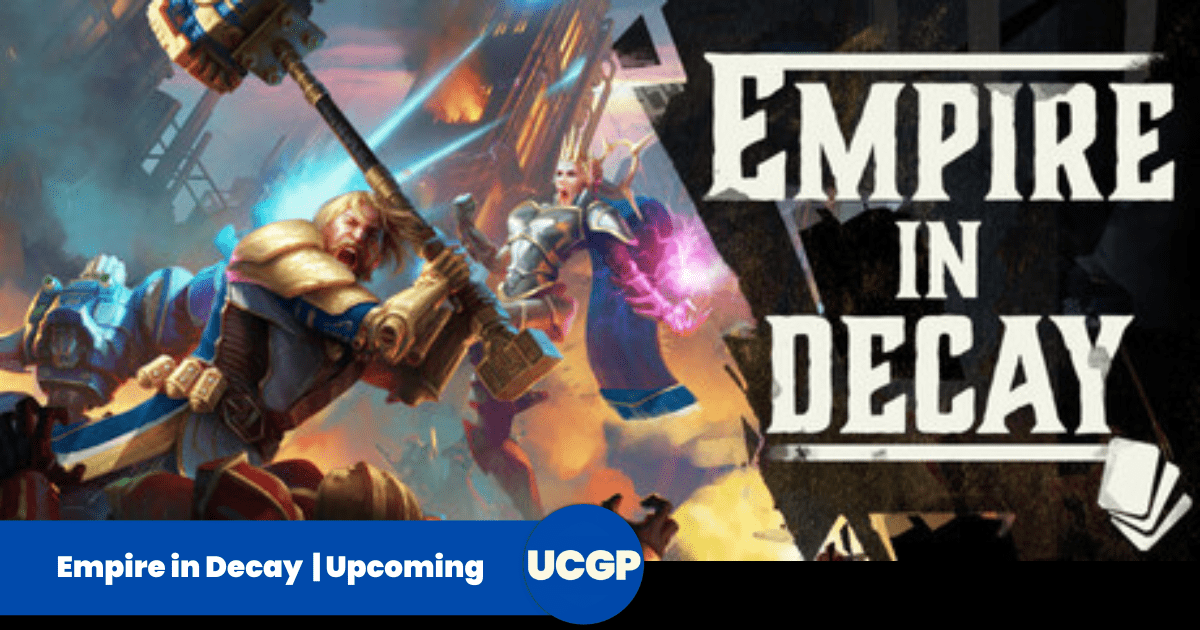

Empire in Decay Release Date (2026): Chess-Inspired Roguelike Deckbuilder, Gameplay, and Complete Guide
Written by Qamar Shahzad, a gaming journalist with 15+ years of industry experience. Published June 2026.
Quick Facts
| Detail | Info |
|---|---|
| Game Name | Empire in Decay |
| Developer | Siesta Games |
| Publisher | Siesta Games |
| Genre | Roguelike Deckbuilder / Tactical Strategy |
| Release Date | July 23, 2026 |
| Platform | PC (Steam) |
| Engine | Unity Engine |
| Factions | 4 |
| Cards | 200+ |
| Units | 24+ |
| Items | 150+ |
| Multiplayer | None (Single-Player Only) |
| Demo Available | Yes, with regular updates |
| Price | Not Officially Confirmed |
Introduction
A quick accuracy note before anything else: Empire in Decay releases on July 23, 2026, not July 1, as some casual searches might assume. That specific date is officially confirmed through Steam, and it matters because plenty of games this month are sitting in vague “July 2026” windows without a firm day attached. Empire in Decay is not one of them. Siesta Games has locked in their date, and the development team has been actively updating the public demo right up through June 2026 to prove it.
What makes Empire in Decay worth paying attention to is the specific combination it is attempting. Roguelike deckbuilders are not a rare genre anymore; Slay the Spire alone spawned a wave of imitators and innovators. But Empire in Decay’s hook is genuinely distinct: chess-inspired tactical movement layered directly into a card-based roguelike structure. You are leading a rebellion through Daandria, the decaying capital of a tyrannical empire, building a deck, recruiting units, collecting relics, and fighting your way toward a confrontation with the king in the Throne Hall, all while thinking about your battlefield the way a chess player thinks about a board.
This article covers everything currently confirmed about Empire in Decay heading into its July 23 launch. The gameplay systems, how the chess-inspired combat actually functions, faction details, the demo’s recent updates, how it stacks up against Slay the Spire and Into the Breach, and an honest read on what to expect from a focused indie tactics game entering an increasingly crowded genre.
Why Empire in Decay Is Generating Attention
The roguelike deckbuilder genre has become genuinely saturated since Slay the Spire redefined what the format could be. Standing out in that space requires either exceptional polish on familiar mechanics or a genuinely new angle on the core formula. Empire in Decay is betting on the second approach, and the chess-inspired combat system is the clearest evidence of that ambition.
Grid-based positioning where movement patterns and tactical spacing matter as much as the cards in your hand is not something Slay the Spire or most of its imitators have attempted. Into the Breach gets closer with its grid-based tactical puzzles, but it does not build a traditional deckbuilding card economy around that structure the way Empire in Decay does. Combining those two design languages, chess-like positional thinking and roguelike card progression, into a single cohesive system is a genuinely interesting design challenge, and it is the reason the indie strategy community has been paying closer attention than a typical small-studio release usually receives.
The demo has played a significant role in building that attention organically. Rather than a static preview build, Siesta Games has been actively pushing updates through June 2026, adding new cards, enemies, bosses, lore events, and balance adjustments based on player feedback. That kind of visible, ongoing development before launch tends to build real trust within strategy and roguelike communities, who have seen plenty of promising indie tactics games either stall in development or launch underbaked.
Coverage from roguelike and deckbuilder-focused YouTube channels has also helped the game find its specific audience early, which matters considerably for a genre where word of mouth within dedicated communities often outweighs broader mainstream marketing reach.
Game Overview
| Category | Details |
|---|---|
| Full Title | Empire in Decay |
| Developer | Siesta Games |
| Publisher | Siesta Games |
| Series | Original IP |
| Genre | Strategy, RPG, Roguelike, Deckbuilder, Tactical Strategy |
| Game Type | Turn-Based Strategy, Roguelike Deckbuilder, Single-Player Tactical RPG |
| Engine | Unity Engine |
| Official Page | Steam Store Listing |
Siesta Games is developing and self-publishing Empire in Decay, which is the standard path for an indie tactics title of this scope. No official standalone studio website or dedicated social media accounts have been confirmed independently of the Steam store presence, so the Steam page currently functions as the primary hub for official information and updates.
Confirmed Information
Here is everything officially confirmed about Empire in Decay ahead of its July 23, 2026 launch:
- Official release date confirmed as July 23, 2026, on PC via Steam
- Chess-inspired turn-based tactical combat with grid-based movement
- Roguelike deckbuilder structure combining card-based combat with procedural progression
- Four playable factions confirmed
- Over 200 cards confirmed
- Over 24 units confirmed
- Over 150 items confirmed
- Artifact and relic collection systems confirmed
- Artifact forging and crafting confirmed
- Unit progression paths confirmed
- Procedurally generated district routes through the city of Daandria
- Storyline centered on leading a rebellion against a tyrannical king, culminating in a confrontation in the Throne Hall
- Playable demo available on Steam
- June 2026 demo update added new cards, enemies, bosses, lore events, improved progression, better UI, balance updates, rendering upgrades, and bug fixes
- No multiplayer, co-op, or PvP features
- No microtransactions announced
- No delays announced
- Unity Engine confirmed
- Minimum system requirements specify a 64-bit processor and 64-bit operating system, though full detailed specifications have not been published
Rumors and Unconfirmed Details
Empire in Decay has a clearly confirmed release date, which sets it apart from many of its indie strategy peers, but several other details remain open:
- Console versions: No information has been confirmed either way. Nothing rules this out, but nothing confirms it either.
- DLC expansions: Not officially confirmed, though the roguelike deckbuilder genre has a strong track record of post-launch content expansions, making this a reasonable area for speculation rather than something grounded in developer statements.
- Additional factions beyond the confirmed four: Community-requested, not officially announced.
- Pricing: Not officially confirmed at the time of this writing.
- Detailed system requirements: Only the basic 64-bit processor and OS requirement have been confirmed. Full specifications, including RAM, GPU, and storage, have not been published.
- Controller support: Not officially confirmed.
- Epic Games Store or other platform availability: Not confirmed beyond the Steam release.
Rumor Reliability: Low. Most of what remains unconfirmed here falls into the category of reasonable indie-game speculation, additional content over time, and possible platform expansion, rather than anything backed by leaks or specific developer hints.
Confirmed vs. Rumored Table
| Confirmed | Rumored |
|---|---|
| July 23, 2026 PC release on Steam | Console versions |
| Chess-inspired tactical combat | DLC expansions |
| Four playable factions | Additional factions post-launch |
| 200+ cards, 24+ units, 150+ items | Pricing |
| Artifact forging and relic collection | Full system requirements |
| Procedural district generation | Controller support |
| Demo available with active updates | Epic Games Store availability |
| No multiplayer or co-op | Battle pass or seasonal content |
| Unity Engine | Cinematic trailer |
| No delays announced | Pre-order bonuses |
Release Date and Timeline
Empire in Decay’s release timeline is one of the clearer and more confidently communicated aspects of this entire profile, which is worth appreciating given how many indie strategy games hedge with vague seasonal windows.
Key timeline:
- Steam store reveal: Empire in Decay’s Steam page goes live, introducing the chess-inspired roguelike deckbuilder concept to the public
- Demo release: A playable demo becomes available on Steam, giving the community direct hands-on access ahead of launch
- June 2026: A significant demo update arrives, adding new cards, enemies, bosses, lore events, improved progression systems, better UI, balance adjustments, rendering upgrades, and bug fixes
- July 23, 2026: Confirmed full release on PC via Steam
The June 2026 demo update is worth dwelling on specifically because of how comprehensive it was. New cards, new enemies, new bosses, and lore events are content additions, not just polish. Combined with progression improvements, UI work, and balance updates, this reads as a development team using the final weeks before launch productively rather than coasting on an already-finished demo build.
No delays have been announced, and the specificity of the July 23 date, as opposed to a vaguer “July 2026” window common among other indie titles releasing the same month, suggests Siesta Games has high confidence in hitting that target.
Empire in Decay Trailer
Platform Availability
Empire in Decay is confirmed exclusively for PC via Steam.
| Platform | Status |
|---|---|
| PC (Steam) | Confirmed, July 23, 2026 |
| Epic Games Store | Not Confirmed |
| PlayStation | Not Confirmed |
| Xbox | Not Confirmed |
| Nintendo Switch | Not Confirmed |
| Mobile | Not Confirmed |
| Cloud Gaming | Not Confirmed |
| Crossplay | Not Applicable |
| Cross-Progression | Not Applicable |
Given the genre, turn-based tactical roguelike deckbuilders translate well to handheld and touch-based platforms generally; a future Nintendo Switch or mobile version would not be a surprising direction if the PC launch performs well. But that is speculation about a possible future, not anything Siesta Games has indicated. For now, PC via Steam is the only confirmed way to play.
Gameplay Deep Dive
Empire in Decay’s core gameplay loop merges two distinct strategic traditions: deckbuilding roguelike progression and chess-inspired tactical positioning. Understanding how these two systems interact is the key to understanding what makes this game’s pitch genuinely interesting rather than just another Slay the Spire variant.
In a typical roguelike deckbuilder, combat resolves through card plays against a relatively static enemy formation, where your deck composition and resource management matter most. Empire in Decay adds a meaningful spatial layer on top of that structure. Combat takes place on a tactical grid where movement and positioning, governed by chess-inspired rules, determine what your cards and units can actually accomplish in a given turn.
Chess-Inspired Combat
The chess influence on Empire in Decay’s combat system means unit movement likely follows patterns reminiscent of how chess pieces traverse a board, with positioning creating tactical opportunities and vulnerabilities that pure card-based combat systems do not generate. This adds a genuine spatial puzzle element to encounters that most deckbuilders simply do not have to offer.
This matters because it changes the skill expression the game asks of players. Slay the Spire rewards deck optimization and resource sequencing. Into the Breach rewards spatial puzzle-solving with a fixed unit roster. Empire in Decay is asking players to think about both simultaneously: building an effective deck while also reading the tactical board state turn by turn. That combination, if well executed, creates a deeper strategic ceiling than either system alone.
Deckbuilding and Card Variety
With over 200 cards confirmed, Empire in Decay offers a genuinely substantial card pool for a launch title in this genre. Card variety at this volume suggests real build diversity across runs, which is essential for roguelike deckbuilder replayability. Players who enjoy discovering powerful card synergies across repeated playthroughs will have a meaningful amount of content to work through even in the initial release.
Units, Items, and Relics
Twenty-four-plus units and 150-plus items round out the systems available for run-to-run customization. Combined with the confirmed artifact forging and relic collection mechanics, Empire in Decay is positioning itself as a deeply systemic game where multiple layers of build customization, deck composition, unit selection, item loadouts, and relic synergies all interact across a single procedurally generated run through Daandria’s districts.
For players who enjoy the moment-to-moment discovery of finding a powerful combination mid-run, this breadth of systems gives Empire in Decay real potential for that kind of emergent strategic satisfaction.
Multiplayer and Co-op
Empire in Decay has no multiplayer, co-op, or PvP features of any kind. This is a single-player tactical roguelike experience built entirely around solo strategic decision-making.
This is consistent with how most successful roguelike deckbuilders in the genre operate. Slay the Spire, Monster Train, and similar titles are built around solo runs where the player manages every decision without external coordination, and that design philosophy suits the deep, deliberate strategic thinking these games ask of players. Adding multiplayer to a genre built around careful, often slow tactical deliberation tends to create friction rather than enhancement, so the absence here is not a gap so much as an appropriate genre-consistent design choice.
Combat System
Combat in Empire in Decay is turn-based and grid-based, built around the chess-inspired movement and positioning system layered with card-based ability resolution. Players engage enemy forces within Daandria’s districts, using a combination of deck-built cards, recruited units, and tactical positioning to overcome encounters that scale in difficulty as a run progresses.
The chess-inspired framing suggests positioning creates genuine tactical depth beyond simple range and line-of-sight considerations common in other grid-based tactics games. How directly the game borrows specific chess piece movement patterns, knight-style L-shapes, bishop diagonals, and so on, has not been fully detailed, but the framing alone signals a design team thinking carefully about spatial relationships as a core combat pillar rather than an afterthought.
Boss encounters are confirmed as a significant content addition through the June 2026 demo update specifically, suggesting Siesta Games is treating boss fight variety and quality as a priority heading into launch. Strong boss design is often what separates memorable roguelike deckbuilders from forgettable ones, since these encounters test whether a player’s entire run-long strategy actually holds up under real pressure.
Progression Systems
Empire in Decay’s progression operates on the standard roguelike deckbuilder model: within-run progression through card and unit acquisition, and presumably some form of meta-progression that persists across runs, though the specific structure of that longer-term system has not been fully detailed in available materials.
Unit progression paths are confirmed, suggesting that recruited units within a run can develop or upgrade over the course of that run rather than remaining static once acquired. This adds another layer of investment and decision-making to the core loop, since players need to consider not just which units to recruit but how to develop them as a run progresses.
Artifact forging as a crafting system gives players active agency over their relic and item progression rather than relying purely on random drops, which is a meaningful design choice for player agency within the otherwise procedurally randomized roguelike structure.
The procedurally generated district routes through Daandria function as the game’s primary replayability driver alongside the deckbuilding variety, ensuring that the specific path and encounters within any given run differ from the last.
Open World Features
Empire in Decay does not feature open world exploration. Instead, the game uses procedurally generated district routes through Daandria, the decaying capital city at the center of the story. This structure is standard and appropriate for the roguelike deckbuilder genre, where branching, randomized path selection between encounters serves the same narrative and strategic purpose that open world traversal serves in other genres, giving players meaningful choices about their route without requiring the scope and resources of a fully realized open world.
The district-based structure also reinforces the narrative framing of Daandria as a city in decline, with each district likely representing a distinct thematic or tactical challenge as players push deeper toward the Throne Hall confrontation.
Character Creation and Faction Selection
Empire in Decay does not feature traditional character creation, but faction selection is confirmed as the primary way players customize their approach to a run. With four factions available, players can choose a starting strategic identity that shapes their available cards, units, and overall tactical philosophy for that playthrough.
This faction-based approach to build variety is a well-established and effective design pattern within the roguelike deckbuilder genre. Slay the Spire’s character classes and Monster Train’s clan combinations both use a similar philosophy, giving players a meaningful strategic identity to build around from the start of each run, rather than starting from a completely blank slate every time.
Story and Setting
Empire in Decay’s narrative follows a rebel faction leader uniting a rebellion against a tyrannical king, set within Daandria, the decaying capital city of a crumbling empire. The story culminates in a confrontation with the king himself in the Throne Hall, giving the procedural run structure a clear narrative endpoint and stakes.
This kind of rebellion-against-tyranny framing is a well-worn but effective narrative backbone for the genre. It provides clear motivation for the escalating difficulty and boss encounters that roguelike structures depend on, without requiring extensive narrative exposition that would slow down the primarily systems-driven gameplay loop.
Lore events were specifically added in the June 2026 demo update, suggesting Siesta Games is investing meaningfully in narrative texture beyond the bare premise, likely delivered through between-run story beats or in-run discoveries that flesh out Daandria’s decline and the broader world beyond the immediate rebellion plot.
Comparison With Similar Games
| Feature | Empire in Decay | Slay the Spire | Into the Breach | Monster Train |
|---|---|---|---|---|
| Core Structure | Card + Grid Tactics Hybrid | Pure Deckbuilder | Pure Tactical Grid Puzzle | Pure Deckbuilder |
| Combat Positioning | Chess-Inspired Grid | Minimal Positioning | Central Mechanic | Minimal Positioning |
| Factions/Classes | 4 | 4 | N/A (Squad-Based) | Multiple Clan Combos |
| Card Count | 200+ | 75+ per character | N/A | 200+ |
| Multiplayer | None | None (Some Daily Runs) | None | None |
| Engine | Unity | Custom | Unity | Unity |
| Genre Position | Hybrid Innovator | Genre Standard | Tactical Puzzle Specialist | Vertical Deckbuilder |
Versus Slay the Spire: This is the most natural comparison point given Slay the Spire’s status as the genre-defining reference for roguelike deckbuilders. Empire in Decay is more tactically demanding than Slay the Spire specifically because of the chess-inspired positioning layer, which Slay the Spire’s combat largely does not require players to think about. Where Slay the Spire’s depth comes almost entirely from deck construction and resource sequencing, Empire in Decay asks players to simultaneously manage spatial tactics, which raises the strategic ceiling but also the learning curve.
Versus Into the Breach: Into the Breach remains the sharpest pure tactical grid puzzle game in this comparison set, with a fixed squad of units rather than a deckbuilding card economy. Empire in Decay sits in between Into the Breach’s positional puzzle focus and Slay the Spire’s card-economy focus, attempting to combine both rather than fully committing to either. Whether that hybrid approach achieves the tight, elegant design that both of those games are individually praised for is the open question that only full release feedback can answer.
Versus Monster Train: Monster Train shares Empire in Decay’s large card pool and multi-faction combination structure, though Monster Train’s vertical, multi-floor combat layout is mechanically distinct from chess-inspired grid movement. Both games clearly value build diversity and faction synergy as core pillars of replayability.
Having followed the roguelike deckbuilder genre closely since Slay the Spire’s breakout success, the projects that find lasting audiences are consistently the ones willing to genuinely reinvent a core mechanical pillar rather than just reskinning the established formula. Empire in Decay’s chess-inspired positioning system is a real attempt at that kind of reinvention, which gives it a stronger foundation for standing out than a typical genre entry, provided the execution holds up.
Community Reactions
Community sentiment around Empire in Decay has been positive, particularly within roguelike and deckbuilder-focused communities who have engaged directly with the demo.
Reddit discussions center heavily on the chess mechanics and how they interact with the broader tactical complexity of the game. Players engaging with the demo have specifically discussed the learning curve associated with mastering both deck construction and positional tactics simultaneously, generally framing this complexity as a positive challenge rather than a deterrent, though some discussion acknowledges it may not be for players who want a more casual roguelike experience.
YouTube coverage has come primarily from roguelike and deckbuilder preview channels, the specific creator community most equipped to evaluate whether Empire in Decay’s hybrid mechanics actually deliver on their promise. Featured coverage from this specific niche matters more for a genre game like this than broader mainstream gaming coverage would, since this audience has the genre fluency to spot whether the chess-and-cards combination genuinely works.
Twitter and X discussions remain more limited in volume but consistently positive, reflecting the indie strategy community’s interest in the concept.
The most consistent community concerns center on three areas: difficulty balance, since combining two demanding strategic systems raises real risk of overwhelming or frustrating less experienced players; content volume at launch, with some community members wanting confirmation that 200-plus cards and four factions will feel substantial enough for long-term replayability; and the learning curve generally, given how much the game is asking players to internalize simultaneously.
Overall community sentiment remains positive, with cautious optimism that the June 2026 demo improvements reflect a team actively addressing early feedback rather than ignoring it.
Pros and Cons
Pros
- Genuinely novel combination of chess-inspired tactical positioning and roguelike deckbuilding mechanics
- The confirmed specific release date (July 23, 2026) provides clarity uncommon among indie strategy releases
- Substantial confirmed content volume with 200+ cards, 24+ units, and 150+ items
- Four factions provide meaningful build variety from the start of each run
- Active, ongoing demo updates demonstrate genuine pre-launch development investment
- Artifact forging gives players agency over relic progression rather than relying purely on random drops
- Strong genre pedigree comparisons to Slay the Spire, Into the Breach, and Monster Train set high but reasonable expectations
- No microtransactions or live service monetization pressure
Cons
- No multiplayer or co-op for players who want a shared strategic experience
- Pricing not officially confirmed ahead of launch
- Full system requirements not published, only a basic 64-bit processor and OS requirement
- No console versions confirmed at this time
- Steep learning curve combining two demanding strategic systems may not suit every roguelike fan
- Small indie team raises natural questions about long-term post-launch content support
Who Should Play Empire in Decay
Strong fit for:
Roguelike deckbuilder fans who have mastered the genre’s standard formula and want a genuinely fresh tactical layer added to the familiar card-based structure. Players who enjoyed Into the Breach’s positional puzzle-solving and wished it had deeper build customization through deckbuilding. Strategy fans drawn to chess-inspired mechanics looking for a fresh application of those ideas outside traditional chess variants. Players who appreciate developers that actively iterate on demos based on community feedback before launch.
Might want to wait or reconsider if:
You are newer to roguelike deckbuilders and want to start with a more streamlined, less mechanically demanding entry point into the genre. You specifically want multiplayer or co-op strategy gameplay. You want confirmed pricing and full system requirements before committing to a wishlist or purchase decision. You prefer console gaming, since no console version is currently confirmed.
System Requirements
Official system requirements for Empire in Decay remain limited at the time of this writing. Only a 64-bit processor and 64-bit operating system have been confirmed, without detailed RAM, GPU, or storage specifications. The estimates below are based on the Unity Engine foundation, the stylized 3D dark fantasy presentation, and comparable roguelike deckbuilder releases. These are estimates only and should be confirmed against official specifications once Siesta Games publishes them in full.
| Confirmed Minimum | Estimated Additional Specs | |
|---|---|---|
| OS | 64-bit operating system | Windows 10 / 11 64-bit |
| CPU | 64-bit processor | Intel Core i5 6th Gen or Ryzen 5 1600 |
| RAM | Not Specified | 8GB |
| GPU | Not Specified | GTX 1050 or equivalent |
| Storage | Not Specified | 5 to 10GB |
| Ray Tracing | No indication of support | No |
| DLSS / FSR | Not Confirmed | Not Confirmed |
| Controller | Not Confirmed | Likely supported, unconfirmed |
Turn-based tactical roguelike deckbuilders are generally not demanding on hardware, since the genre prioritizes UI clarity and stylized presentation over real-time rendering intensity. Despite the 3D dark fantasy visual presentation Empire in Decay uses, the turn-based structure suggests modest hardware requirements relative to action-oriented 3D games, making this likely accessible on a wide range of mid-range PCs once full specifications are confirmed.
Expert Predictions
Looking at where Empire in Decay sits heading into its confirmed July 23, 2026 launch and how comparable hybrid-mechanic indie strategy games have performed:
The chess-inspired combat system will be the defining factor in early reviews and community reception. If the positional tactics genuinely add strategic depth without overcomplicating the core deck-building loop, this could become a genre highlight that gets referenced as an innovation point for years, the way Into the Breach’s tactical puzzle design or Slay the Spire’s deck-building economy became reference points. If the systems feel disconnected or the chess elements feel superficial rather than mechanically meaningful, expect more measured reception focused on the card-based half of the experience instead.
Given the active demo update cadence through June 2026, expect continued post-launch support in a similar vein, balance patches, additional content, and ongoing refinement based on player feedback. This pattern of development behavior suggests Siesta Games understands that roguelike deckbuilders, perhaps more than most genres, benefit enormously from sustained post-launch iteration based on real player data across thousands of runs.
Additional factions and expanded content seem like a reasonable expectation for post-launch updates given the genre’s established patterns, though this remains speculation rather than anything officially confirmed.
Console versions becoming available at some point following a successful PC launch would not be surprising given how well the genre has historically translated to Nintendo Switch specifically. This is speculation based on genre patterns, not a confirmed roadmap.
The most significant risk heading into launch is the learning curve concern raised consistently in community discussions. Whether Siesta Games has found the right onboarding and difficulty curve to make the dual systems approachable without sacrificing depth will likely be the single biggest factor separating strong reviews from mixed ones.
Trailer and Media Analysis
Empire in Decay’s official Steam trailer showcases tactical battles, card upgrade sequences, faction selection, boss encounters, and district exploration, giving potential buyers a reasonably comprehensive look at the core systems before purchase.
The chess-like combat demonstrations shown in trailer footage are the most important visual content for understanding what makes this game distinct. Seeing units moving across the tactical grid in patterns that echo chess piece movement, while card-based abilities resolve around that positioning, communicates the hybrid system more effectively than written description alone could.
The 3D dark fantasy visual presentation, combined with a tactical board-game style layout, gives Empire in Decay a distinct aesthetic identity within the genre. Many roguelike deckbuilders lean into 2D illustrated card art with minimal battlefield presentation. Empire in Decay’s commitment to a more fully realized 3D tactical environment is a meaningful visual differentiator, even if it represents a different set of production priorities than its more illustration-focused genre peers.
Boss fight footage shown in available media reinforces how seriously the team is treating these encounters as showcase moments, consistent with the boss content additions confirmed in the June 2026 demo update specifically.
Card interaction sequences shown in the trailer give a sense of the UI clarity players can expect when managing the deckbuilding side of the experience, which matters considerably for a game asking players to simultaneously track spatial tactics and card economy.
FAQ Section
What is the release date of Empire in Decay? Empire in Decay releases on July 23, 2026, on PC via Steam. This is a confirmed specific date, not a general July 2026 window.
Is Empire in Decay available on Steam? Yes. Empire in Decay is confirmed for release exclusively on Steam at this time.
Does Empire in Decay have a demo? Yes. A playable demo is available on Steam, and it received a significant update in June 2026, adding new cards, enemies, bosses, lore events, and various improvements ahead of the full launch.
What type of game is Empire in Decay? Empire in Decay is a chess-inspired roguelike deckbuilder. It combines turn-based tactical grid combat with card-based deckbuilding, unit progression, and relic collection across procedurally generated runs.
Is Empire in Decay multiplayer? No. Empire in Decay is a single-player tactical roguelike experience with no multiplayer, co-op, or PvP features.
How many factions are in Empire in Decay? Empire in Decay launches with four playable factions, each offering a different strategic starting identity for runs.
What makes Empire in Decay different from other deckbuilders? Empire in Decay’s defining feature is its chess-inspired tactical combat system, which adds grid-based positional movement and spatial strategy on top of a traditional roguelike deckbuilding structure. This combination of positional tactics and card-based progression is not something most genre peers like Slay the Spire or Monster Train attempt.
What are the PC requirements for Empire in Decay? Confirmed minimum requirements include a 64-bit processor and 64-bit operating system. Full detailed specifications, including RAM, GPU, and storage requirements, have not yet been officially published.
Final Verdict
Empire in Decay enters a genuinely crowded genre with something that actually feels new: a chess-inspired tactical layer woven directly into the roguelike deckbuilding formula that Slay the Spire popularized. That is not a small ambition. Successfully merging two demanding strategic systems, spatial positioning and card economy management, without one undermining the other is a real design challenge, and the confirmed scope, four factions, over 200 cards, 24-plus units, and 150-plus items, suggests Siesta Games is building toward genuine depth rather than a shallow gimmick.
The confirmed July 23, 2026, release date is itself a point in the game’s favor. Specificity like this, combined with a demo that has received substantive content and balance updates as recently as June 2026, signals a development team that is confident in their timeline and actively responsive to player feedback heading into launch.
The biggest open question is execution on the learning curve. Asking players to think tactically about chess-inspired positioning while simultaneously managing deck construction is a genuinely higher cognitive load than most roguelike deckbuilders demand, and whether Siesta Games has built the onboarding and difficulty curve to make that approachable will likely define the difference between a celebrated genre innovation and a niche game that only the most dedicated strategy fans fully appreciate.
For roguelike and tactics fans who have exhausted the standard genre formula and want something that genuinely tries a new combination, Empire in Decay is absolutely worth trying the demo for ahead of the July 23 launch. The demo’s recent updates suggest you will be evaluating a fairly representative slice of what the full release offers.
Keep an eye on Siesta Games’ Steam page for confirmed pricing and any additional pre-launch updates as July approaches. This is one of the more interesting tactical roguelikes heading into the back half of 2026.