






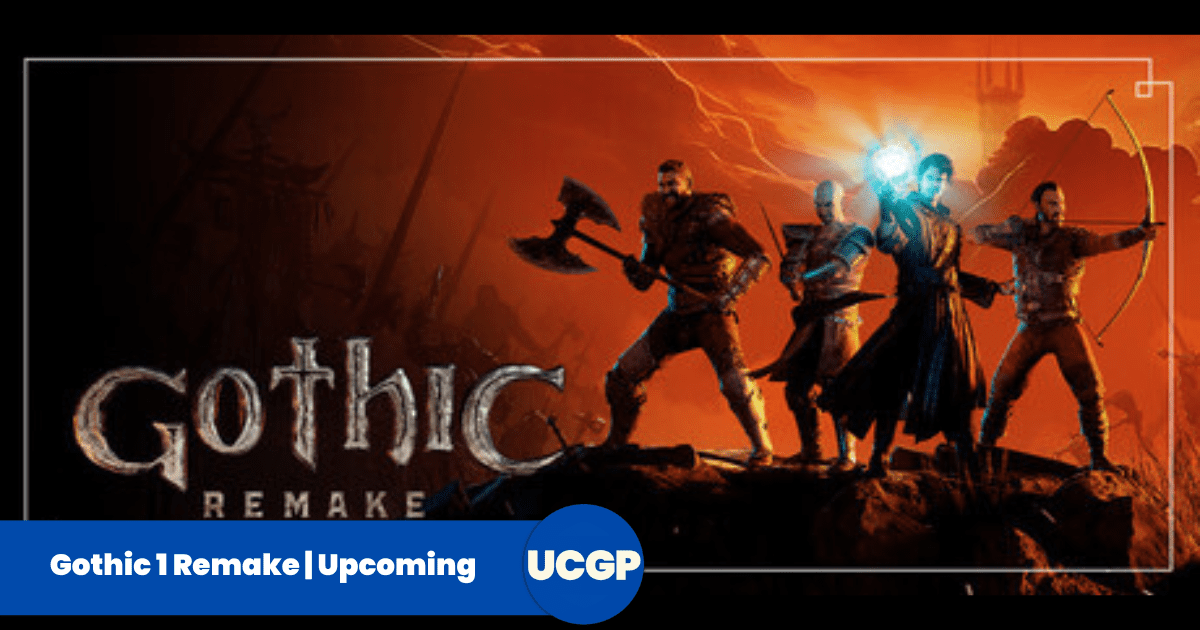

Gothic 1 Remake (2026): Release Date, Gameplay, Unreal Engine 5, Platforms and Complete Guide
By: Qamar Shahzad | Gaming Journalist, 15+ Years Experience | Published June 2026
Quick Facts
| Detail | Info |
|---|---|
| Game Name | Gothic 1 Remake |
| Developer | Alkimia Interactive |
| Publisher | THQ Nordic |
| Release Date | June 5, 2026 |
| Platforms | PS5, Xbox Series X/S, PC via Steam |
| Genre | Action RPG, Open World |
| Engine | Unreal Engine 5 |
| Original Game | Gothic (2001) |
| Multiplayer | None |
| Pre-Order Bonus | Gothic Classic (console pre-orders) |
| Collector’s Edition | Yes |
| Demo | Nyras Prologue, Standalone |
Introduction
There are certain RPGs from the early 2000s that never quite left the minds of the players who experienced them. Gothic from 2001 was one of those games. Developed by Piranha Bytes, it was rough around the edges by any modern standard, but it had something that smoother and more polished RPGs of its era lacked: a world that felt genuinely alive and dangerous, a faction system that made your choices matter from the first hour, and a protagonist who started at the absolute bottom of the social hierarchy and had to earn every inch of progress.
That game now has a full remake. Gothic 1 Remake, developed by Alkimia Interactive and published by THQ Nordic, launched on June 5, 2026, across PlayStation 5, Xbox Series X/S, and PC via Steam. Built entirely in Unreal Engine 5, it rebuilds the original game from the ground up with modern visuals, updated combat, improved NPC systems, and expanded quest content while staying faithful to the story, atmosphere, and design philosophy that made the original a cult classic.
This article covers everything you need to know: what changed, what stayed the same, how the combat and faction systems work, what the community is saying, how it compares to other major RPGs in 2026, and whether Gothic 1 Remake delivers on the enormous expectations that come with remaking a game this beloved.
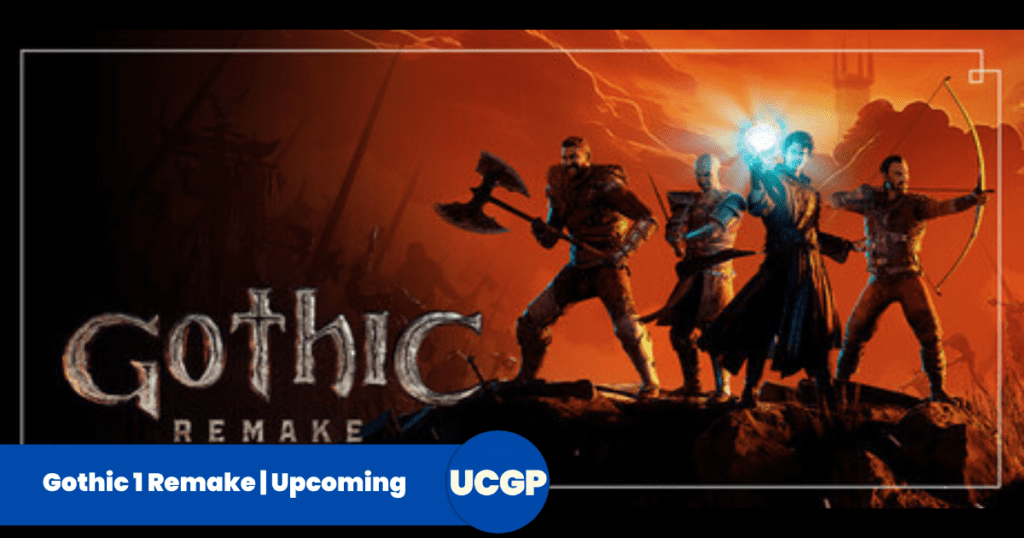
Why Gothic 1 Remake Matters in 2026
The RPG space in 2026 is genuinely competitive. Oblivion Remastered arrived earlier this year and reminded a huge audience what classic open world RPGs felt like. Kingdom Come: Deliverance II continued building its reputation as one of the most grounded medieval RPG experiences available. Into that landscape comes Gothic 1 Remake, representing a different kind of RPG entirely.
Gothic was never mainstream in the way Morrowind or Baldur’s Gate were. It found its audience through word of mouth, through players who appreciated that its world was genuinely hostile, that NPCs had actual schedules and personalities, that joining a faction had real consequences for how the world treated you, and that character progression felt earned rather than handed to you. That audience has been waiting for this remake since it was first announced back in 2020.
Six years of development time. A playable standalone demo called Nyras Prologue released to let players experience the rebuilt world ahead of launch. Unreal Engine 5 visuals that represent a staggering leap from the 2001 original. THQ Nordic is a publisher that has demonstrated genuine respect for the classic RPG properties they acquire. The ingredients here are right.
What the Gothic community cares most about is not just whether it looks better. They care whether it feels like Gothic. Whether the world still has that specific quality of danger and authenticity. Whether the Nameless Hero still starts as nobody and earns respect through choices and actions rather than birthright. Whether the Valley of Mines still feels like a place with its own internal logic.
Journalist Note: After covering RPG remakes across many years of the industry, the ones that succeed long-term are the ones where the development team played the original obsessively and understood what created the emotional resonance rather than just recreating the technical features. Alkimia Interactive’s use of the Nyras Prologue demo as a community feedback mechanism suggests exactly that kind of development approach.
Gothic 1 Remake Game Overview
| Field | Details |
|---|---|
| Full Title | Gothic 1 Remake |
| Developer | Alkimia Interactive |
| Publisher | THQ Nordic |
| Genre | Action RPG |
| Game Type | Open-World Action RPG |
| Engine | Unreal Engine 5 |
| Series | Gothic Franchise |
| Original Release Year | 2001 |
| Multiplayer | None |
| Single-Player | Yes, exclusively. |
Alkimia Interactive is a Barcelona-based studio formed specifically to develop the Gothic remake. THQ Nordic, known for their stewardship of classic European RPG franchises, serves as publisher. The choice of an entirely new studio dedicated to this single project rather than an in-house team speaks to how seriously THQ Nordic approached the remake. Building a team around the game rather than assigning it to an existing studio is a signal of genuine commitment to getting it right.
Unreal Engine 5 as the technical foundation gives the remake access to the most capable rendering technology currently available for games. The visual transformation from the 2001 original to the 2026 remake is not incremental. It is complete.
Confirmed Information About Gothic 1 Remake
Everything below has been officially confirmed by Alkimia Interactive or THQ Nordic:
- June 5, 2026, worldwide release date
- PS5, Xbox Series X/S, and PC via Steam versions
- Built on Unreal Engine 5
- Open-world RPG gameplay faithful to the original design
- The Valley of Mines fully explorable with reactive NPCs
- Faction-based progression system retained
- Modernized combat system based on original foundations
- Dynamic NPC schedules and living world AI
- Nameless Hero as protagonist
- All major characters from the original confirmed
- Crafting and item creation systems included
- Skill progression through trainers and learning points
- Nyras Prologue standalone demo released
- Single-player only experience
- No microtransactions
- Collector’s Edition confirmed
- Console pre-orders include Gothic Classic digitally
- Special editions announced
Rumours and Unconfirmed Details
No significant credible leaks exist around the Gothic 1 remake beyond what THQ Nordic and Alkimia Interactive have officially shared. The following remains unconfirmed:
- Post-launch DLC or story expansions
- Modding support and community tools
- Additional graphical options including ray tracing
- Specific PC system requirements
- Official difficulty settings
- Cross-platform features
- Future Gothic 2 Remake possibility
- Epic Games Store availability
Rumor reliability is low. Community speculation around a potential Gothic 2 remake is the most active unconfirmed discussion but represents wishful thinking rather than sourced information.
Gothic 1 Remake: Confirmed vs. Rumored Table
| Confirmed | Rumoured or Unconfirmed |
|---|---|
| June 5, 2026: PS5, Xbox, PC launch | Post-launch DLC expansions |
| Unreal Engine 5 rebuild | Gothic 2 Remake in development |
| Open-world Valley of Mines | Modding support and community tools |
| Faction-based progression system | Ray tracing support |
| Modernized combat system | Full PC system requirements |
| Dynamic NPC schedules | Epic Games Store availability |
| Nyra’s Prologue demo released | Official difficulty settings |
| The console pre-order includes Gothic Classic | Cross-platform features |
| Collector’s Edition confirmed | Additional post-launch graphical options |
Gothic 1 Remake Release Date and Timeline
Gothic 1 Remake launched on June 5, 2026, worldwide on PS5, Xbox Series X/S, and PC via Steam. The final release date was announced in February 2026, providing a clear window for community preparation and pre-orders. No major delays were reported after the February announcement, and the game arrived on its confirmed date.
The path to this launch started with the original remake announcement in 2020, making this a six-year development journey from announcement to release. Along the way, Alkimia Interactive released the Nyras Prologue, a standalone playable demo that let the Gothic community experience the rebuilt world and provide feedback. The demo served both as a marketing tool and as a genuine development resource, with community feedback reportedly influencing aspects of the final game.
Pre-orders were available ahead of launch across all platforms. Console pre-orders include the original Gothic Classic as a digital bonus, which gives returning fans and new players alike the opportunity to experience where the story began. Collector’s editions and special editions were also available for the franchise’s most dedicated supporters.
Gothic 1 Remake Trailer
Gothic 1 Remake Platform Availability
| Platform | Status |
|---|---|
| PS5 | Confirmed, June 5, 2026 |
| Xbox Series X/S | Confirmed, June 5, 2026 |
| PC via Steam | Confirmed, June 5, 2026 |
| Nintendo Switch | Not Announced |
| Epic Games Store | Not Confirmed |
| Mobile | Not Available |
| Cloud Gaming | Not Confirmed |
| PS4 or Xbox One | Not Confirmed |
Gothic 1 Remake launches simultaneously across PS5, Xbox Series X/S, and PC via Steam. The three-platform simultaneous release is appropriate for a major RPG of this profile. Nintendo Switch support has not been announced, which is consistent with the game’s Unreal Engine 5 technical requirements.
Crossplay and cross-progression are not applicable since Gothic 1 Remake is a single-player experience with no multiplayer components.
Gothic 1 Remake Gameplay Deep Dive
What Kind of RPG Is This?
Gothic 1 Remake is an open-world action RPG that prioritizes freedom, consequence, and world authenticity over accessibility and handholding. This is not a Skyrim-style experience where you are the chosen hero from the first moment. You start as nobody, thrown into a penal colony where the established residents have zero reason to respect you. Progress is earned.
The game preserves the core design philosophy of the original: the world has its own logic, and you need to learn it. NPCs have schedules and reactions based on your reputation and faction standing. Joining one of the three factions shapes how the rest of the world treats you. Exploration is rewarding but dangerous, because the Valley of Mines does not scale to your level.
The Valley of Mines Open World
The Valley of Mines is the central open-world environment of Gothic 1 Remake. It is fully explorable from early in the game, but that freedom comes with genuine risk. Moving into areas where powerful creatures or hostile groups dominate without adequate preparation ends badly. The world is not designed around you. You are designed for the world.
This approach to open-world design is meaningfully different from most modern RPGs. It creates exploration that feels like discovery rather than traversal, because reaching a new area and surviving it represents genuine achievement rather than a participation reward.
NPC Behavior and Living World Systems
Dynamic NPC schedules were one of the features that made the original Gothic so distinctive in 2001. Characters had daily routines. They slept, they worked, they socialized. Their reactions to you changed based on your faction, your reputation, and your actions. The 2026 remake rebuilds these systems with modern AI capabilities that make the living world feel more authentic than the original’s implementation could achieve.
A world that behaves according to its own rules rather than around the player’s convenience creates immersion that no amount of graphical quality can replicate on its own. When the NPCs feel like inhabitants of a real place rather than quest dispensers, exploration has a quality that stays with players long after the game is finished.
Combat System
The combat has been modernized from the original’s somewhat clunky mechanical foundation while preserving the weight and consequence that made it feel different from lighter action RPGs. The original Gothic combat was not elegant, but it had a physicality that mattered. You felt impacts. Enemies reacted to hits. Fighting was not something to take casually.
The remake improves the responsiveness and control while keeping that fundamental combat philosophy. Melee weapons, including swords and axes, have distinct handling. Ranged options with bows and crossbows function as meaningful alternatives rather than backup options. Magic spells provide a different engagement style for character builds focused on that path.
Multiplayer and Co-op
Gothic 1 Remake has no multiplayer, co-op, or PvP of any kind. It is a purely single-player RPG experience, and that is entirely the right decision for this type of game.
Gothic’s identity is built around the personal narrative of the nameless hero earning his place in a hostile world. That narrative requires solitude and isolation. The experience of being alone in the Valley of Mines and choosing your allies and navigating faction politics as a single individual is the emotional core of what Gothic is. Multiplayer would fundamentally change the nature of that experience in ways that would damage it.
Gothic 1 Remake Combat System in Detail
Combat in Gothic 1 Remake uses a modernized version of the original game’s melee and ranged foundations. The original Gothic had a directional attack system that felt unique but could be frustrating for newcomers. The remake rebuilds the combat with modern responsiveness and cleaner controls while preserving the commitment and consequence that made each fight feel meaningful.
Enemies are not infinitely scalable challenges that adjust to your level. An early encounter with a creature that your current build cannot handle is a signal to either improve your character or find a different path. This non-scaling world design creates combat that means something. Survival against a difficult enemy after proper preparation is genuinely satisfying in a way that auto-balanced combat cannot replicate.
The skill progression system means your combat capabilities improve through deliberate choices. Trainers across the Valley of Mines teach specific skills for payment in learning points earned through experience. Deciding which skills to prioritize shapes your character’s combat identity in a way that feels earned rather than automatic.
Progression Systems in Gothic 1 Remake
Progression in Gothic 1 Remake is stat-based and trainer-dependent rather than focused on visual customization. Experience from quests and combat provides learning points. Those learning points are spent with trainers who specialize in specific skill areas. You cannot learn everything. Your choices define what kind of Nameless Hero you become.
The faction system adds another dimension to progression. Joining the Old Camp, the New Camp, or the Sect Camp changes which resources, quests, and trainers you have access to. Your faction standing determines how the inhabitants of each camp react to you and what opportunities become available. This is not a choice you make once and forget. It is a framework that shapes your entire playthrough.
Crafting and item creation systems allow additional progression through equipment improvement rather than pure combat advancement. Resource gathering and crafting investment is another dimension of the progression system for players who want to engage with it.
Open-World Features of Gothic 1 Remake
The Valley of Mines is the complete open world of the Gothic 1 remake. It is not a massive sprawling map. It is a focused, dense, handcrafted world where every location has a purpose and every area has been designed with intention rather than filled with procedural content.
This focused approach to open-world design is philosophically opposite to the current trend of enormous open worlds with hundreds of map markers. Gothic’s world is smaller and much more detailed. The NPCs matter as individuals. The locations have history. The exploration feels like uncovering a real place rather than checking boxes on a discovery system.
Unrestricted exploration from early in the game means you can technically go anywhere, but surviving depends on your preparation and character development. This creates natural zones of progress without artificial barriers like locked gates or level-gated paths.
Character Creation and Progression
Gothic 1 Remake does not feature extensive visual character creation. You play as the Nameless Hero, a defined protagonist with an established visual appearance and backstory context. The character customization comes entirely through the stat and skill progression system rather than cosmetic options.
This is faithful to the original game’s design and appropriate for a story-driven RPG where the protagonist’s identity is part of the narrative rather than a blank slate for player projection. The Nameless Hero has a specific personality and voice. You shape his capabilities and faction allegiances, not his face.
The depth of the build system, which skills you develop, which faction you join, and which magic school you pursue, if any, creates meaningful character differentiation between playthroughs even without visual customization options.
Story and Setting of Gothic 1 Remake
The Colony and the Barrier
The story of Gothic 1 Remake begins with the Nameless Hero being thrown into a magical penal colony known as the Colony, sealed behind an impenetrable magical barrier created by the king’s mages to contain the kingdom’s convict labor force. The convicts inside have long since taken control from the guards, establishing their own power structure divided into three factions.
Outside the Barrier, the kingdom fights a war against the Orcs. The convicts inside mine magical ore that the kingdom needs for the war effort. This political situation, trapped workers supplying an army that fights a war they cannot see, creates the backdrop for a story about survival, faction loyalty, and the discovery of something much larger happening beneath the surface of the Colony.
The Three Factions
The Old Camp is the dominant power, run by ruthless overseers who trade ore with the kingdom in exchange for supplies and live reasonably well by colony standards. The New Camp rejects this arrangement and seeks to destroy the Barrier through a power stone they are slowly charging. The Sect Camp follows a mysterious cult that worships a Sleeper entity beneath the earth and pursues its own path to freedom through religious devotion.
Choosing which faction to align with is not a simple good versus evil choice. Each faction has genuine internal logic, legitimate grievances, and morally complex members. The Nameless Hero’s journey through this power structure, learning who to trust and what the Colony’s real secrets are, is one of the most compelling RPG narratives the genre produced in the 2000s.
Major Characters
The supporting cast of the original Gothic became iconic within the RPG community. Diego, who meets you at the Colony’s entrance and offers initial guidance. Xardas, the renegade mage living in isolation outside all faction politics. Milten, Gorn, and Lester as companions with distinct personalities. Gomez as the Old Camp’s ruthless leader. The remake preserves these characters while giving them the visual detail and animation quality of modern game development.
How Gothic 1 Remake Compares to Similar Games
Versus the Original Gothic (2001)
The 2001 original is a complete rebuild. Everything is new: visuals built in Unreal Engine 5, combat rebuilt from scratch, NPC systems expanded, quest content extended. The core story, atmosphere, and design philosophy are preserved. The original’s technical roughness is gone. What replaces it is a faithful recreation with modern production values. For players who could not get past the 2001 original’s dated mechanics, the remake removes those barriers. For veterans, the question is whether the atmosphere survived the modernization.
Versus Oblivion Remastered
Oblivion Remastered arrived earlier in 2026 and reminded players what Bethesda’s classic RPG felt like with modern visuals. Gothic 1 Remake and Oblivion Remasters represent fundamentally different RPG philosophies. Oblivion is accessible, forgiving, and designed around player comfort. Gothic is demanding, consequence-driven, and designed around world authenticity over player convenience. They are not interchangeable. Players who want both are genuinely fortunate that 2026 has delivered remakes of both classics.
Versus Kingdom Come: Deliverance II
Kingdom Come: Deliverance II shares Gothic’s commitment to grounded, consequence-driven RPG design and its rejection of the hero fantasy that more mainstream RPGs embrace. Both games ask you to earn your place in a world that does not care about you. KCD2 is more historically realistic and simulation-focused. Gothic 1 Remake is more fantasy-oriented and faction-driven. The audiences overlap significantly, and both games deserve a place in any serious RPG player’s library.
Versus The Witcher 3
The Witcher 3 is the benchmark for narrative quality and open world density in modern RPGs. Gothic 1 Remake is not competing with it on content volume or production budget. It is offering something different: a focused, handcrafted world with a specific design philosophy that The Witcher 3 does not replicate. Geralt is a defined hero with established relationships. The Nameless Hero is defined by the choices you make for him. The comparison is less about which is better and more about what experience you are looking for.
Comparison Table
| Game | World Scale | Difficulty | Faction System | Narrative Style | Engine |
|---|---|---|---|---|---|
| Gothic 1 Remake | Focused Dense | Challenging | Deep, Three Factions | Atmospheric Mystery | Unreal Engine 5 |
| Oblivion Remastered | Large Open | Accessible | Guild-Based | Hero Fantasy | Updated Original |
| Kingdom Come Deliverance II | Large Open | Very Hard | Reputation-Based | Historical Drama | Custom Engine |
| The Witcher 3 | Very Large | Moderate | None | Character Narrative | REDengine |
| ELEX II | Open World | Challenging | Multi-Faction | Sci-Fantasy | Custom Engine |
Community Reactions to Gothic 1 Remake
Reddit: Highly positive discussions in Gothic and RPG communities. The atmosphere and world-building have received the most enthusiastic responses from players who tried the Nyras Prologue demo. The most active debates involve the combat changes: whether the modernization preserves the original’s feel or smooths away something important. Overall sentiment is strongly positive with passionate disagreement about specific design decisions, which is exactly what you expect from a devoted fanbase engaging seriously with a beloved game.
YouTube: Trailer breakdowns, comparison videos between the 2001 original and the 2026 remake, and Nyras Prologue gameplay analysis have been the dominant content. RPG-focused creators have given the game significant coverage, and the visual transformation from original to remake is naturally compelling video content.
Twitter/X: Strong engagement from RPG fans broadly and the Gothic community specifically. The Unreal Engine 5 visuals have been widely shared. Discussion of the faction system and whether the remake captures the original’s atmosphere dominates the discourse.
Discord: Gothic series servers and RPG communities are discussing faction choices, lore accuracy, combat system changes, and remake improvements in significant depth. The level of pre-launch analysis from the community reflects years of anticipation rather than casual interest.
Most requested features from the community include expanded modding support for PC, post-launch DLC expansions, and better inventory management compared to the original. Performance optimization at launch has also been raised as a concern given Unreal Engine 5’s hardware demands.
Overall community sentiment is positive with genuine excitement from a community that has waited years for this and realistic caution about whether the final product fully delivers on the promise.
Gothic 1 Remake Pros and Cons
Pros
- Faithful remake of a genuinely beloved cult classic RPG
- Unreal Engine 5 delivers a massive visual upgrade over the 2001 original
- Living world with dynamic NPC schedules and faction behavior preserved
- Three distinct factions with meaningful consequences for your choice
- Modernized combat improves responsiveness while keeping original weight
- Nyras Prologue demo gave community hands-on experience before launch
- Console pre-orders include Gothic Classic digitally as a bonus
- Collector’s Edition available for dedicated fans
- No microtransactions or live service elements
- THQ Nordic has demonstrated care for classic European RPG franchises
- Single-player focused with no compromises for multiplayer systems
Cons
- High community expectations create significant pressure on the final product
- Unreal Engine 5 hardware requirements may cause performance concerns
- PC system requirements not officially published
- Possible launch optimization issues typical of Unreal Engine 5 games
- Combat changes may not satisfy every original fan
- No confirmed post-launch DLC or modding support
- Nintendo Switch version not available
- Niche appeal relative to mainstream RPGs limits initial audience
Who Should Play Gothic 1 Remake
Gothic 1 Remake is a strong fit if you
- Played the original Gothic and have been waiting for this remake
- Enjoy challenging RPGs where the world does not revolve around you
- Appreciate faction-based storytelling with meaningful consequences
- Want an open world that feels handcrafted rather than procedurally vast
- Love RPGs like Kingdom Come: Deliverance, Morrowind, or Piranha Bytes games
- Want to experience a cult classic story with modern visual quality
- Prefer deep single-player RPG experiences without online components
Gothic 1 Remake may not suit you if you
- Prefer accessible RPGs with forgiving progression and guidance
- Need a large seamless open world with hundreds of activities
- Expect combat as fluid as modern action games
- Require multiplayer or co-op features
- Are sensitive to launch performance issues in demanding UE5 titles
- Have never played any Gothic title and are unfamiliar with this style of RPG
Gothic 1 Remake System Requirements
Official PC system requirements have not been published by Alkimia Interactive or THQ Nordic as of this writing. Based on Unreal Engine 5 game requirements from comparable open-world RPG releases and the visual scope of Gothic 1 Remake, the following estimates are reasonable starting points. These should be verified against official Steam listings once published:
Estimated Minimum Requirements
| Specification | Estimated Details |
|---|---|
| OS | Windows 10 64-bit |
| CPU | Intel Core i7-8700 or AMD Ryzen 5 3600 |
| RAM | 16 GB |
| GPU | NVIDIA RTX 2060 or AMD RX 6600 |
| Storage | 30 to 60 GB approx |
| DirectX | Version 12 |
| Controller | Yes, confirmed supported |
Estimated Recommended Requirements
| Specification | Estimated Details |
|---|---|
| OS | Windows 10 or 11 64-bit |
| CPU | Intel Core i7-12700K or AMD Ryzen 7 5800X3D |
| RAM | 32 GB |
| GPU | NVIDIA RTX 3080 or AMD RX 6800 XT |
| Storage | 30 to 60 GB approx. SSD |
| DirectX | Version 12 |
| Controller | Yes |
Unreal Engine 5 games have historically been demanding on hardware, particularly RAM and GPU. The recommended specifications lean higher than comparable open-world RPGs because of the engine’s Nanite and Lumen rendering systems. The target framerate on PS5 and Xbox Series X is 60 FPS. PC performance at the recommended specs should match that target at 1080p to 1440p resolution.
Expert Predictions for Gothic 1 Remake
Gothic 1 Remake is one of the most anticipated RPG remakes of 2026 and carries the weight of community expectation that six years of development and decades of franchise devotion create. The conditions for a successful launch are in place. The development team used the Nyras Prologue as a genuine feedback mechanism. THQ Nordic has a track record of respecting classic franchises. Unreal Engine 5 has delivered the visual transformation the original deserved.
The most realistic concern going into launch is performance optimization. Unreal Engine 5 games have launched with optimization issues across multiple high-profile releases, and Gothic 1 Remake’s open world demands will test the engine’s current optimization state. Post-launch patches addressing performance should be expected and will likely be necessary for the PC version in particular.
Whether the remake captures the specific atmospheric quality that made Gothic special is the question that cannot be answered definitively until the community has spent significant time with the full game. The Nyras Prologue suggested Alkimia Interactive understood the assignment. Whether that understanding held through the full game will determine the remake’s lasting reputation.
Long-term potential is high if THQ Nordic supports the game with updates and potential DLC. A successful Gothic 1 remake would logically open the path toward a Gothic 2 remake, which the Gothic community would receive with enormous enthusiasm. Nothing has been announced, and this is speculation, but the commercial logic and fan appetite both point clearly in that direction.
The comparison to Oblivion Remastered arriving in the same year as a major classic RPG revival is significant for the genre. Two beloved classic RPGs rebuilt for modern hardware in the same year represent a genuine moment of renewal for the European RPG tradition, and Gothic 1 Remake is the more niche and demanding of the two offerings.
Frequently Asked Questions About Gothic 1 Remake
When does Gothic 1 Remake release? Gothic 1 Remake launched on June 5, 2026, worldwide on PS5, Xbox Series X/S, and PC via Steam.
Is Gothic 1 Remake coming to PS5? Yes. Gothic 1 Remake is available on PlayStation 5 as of June 5, 2026.
Does Gothic 1 Remake have multiplayer? No. Gothic 1 Remake is a single-player-only experience. There is no multiplayer, co-op, or competitive mode in any version of the game.
What engine does Gothic 1 Remake use? Gothic 1 Remake is built on Unreal Engine 5, which enables a significant visual upgrade over the 2001 original, including modern lighting, detailed character models, and advanced environmental rendering.
Is Gothic 1 Remake open-world? Yes. Gothic 1 Remake features the Valley of Mines as a fully explorable open world with reactive NPCs, faction territories, and unrestricted exploration. The world does not scale to your level, which means preparation and progression are genuinely important for surviving new areas.
What is the Nyras Prologue demo? Nyras Prologue is a standalone playable demo released by Alkimia Interactive ahead of the Gothic 1 Remake launch. It let players experience the rebuilt Valley of Mines environment and provided the community with hands-on access to the modernized gameplay before the full game launched.
Is Gothic 1 Remake faithful to the original? Alkimia Interactive and THQ Nordic have consistently stated that preserving the atmosphere, freedom, and identity of the 2001 original is the core goal of the remake. The story, faction system, world design, and NPC behavior are retained while the visuals, combat, and technical systems have been fully rebuilt for modern hardware.
Will Gothic 1 Remake be available on Steam? Yes. Gothic 1 Remake is available on PC via Steam as of June 5, 2026.
Final Verdict
Gothic 1 Remake is the definitive way to experience one of the most distinctive and influential RPGs ever made. Alkimia Interactive has done the hard work of rebuilding a quarter-century-old game in Unreal Engine 5 without losing the qualities that made it worth remaking in the first place: the living world, the faction politics, the earned progression, and the specific atmosphere of being an outsider learning to survive in a place that wants nothing to do with you.
The visual transformation is extraordinary. Seeing the Valley of Mines in Unreal Engine 5 after spending time with the 2001 original is a genuine before-and-after moment. But visuals alone do not justify a remake of a beloved game. The faction system, the NPC behavior, and the combat modernization carry equal weight in determining whether this succeeds or fails as an experience.
The honest concerns are real. Performance optimization on PC may require post-launch patches. The community’s high expectations create pressure that almost no game can perfectly satisfy. The combat changes will not please every original fan.
For RPG players who have never experienced Gothic and want to understand why it has maintained a devoted community for over two decades, the 2026 remake provides the most accessible and visually impressive entry point in the franchise’s history. For veterans who remember the original, this is the version they deserved years ago.
Gothic 1 Remake is on PS5, Xbox Series X/S, and PC via Steam now. If you care about RPGs, you owe it to yourself to spend time in the Valley of Mines.
Written by Qamar Shahzad, gaming journalist with 15+ years of industry experience. Published June 2026.