







The Gate Must Stand (2026): Release Date, Gameplay, and Complete PC Guide
Written by Qamar Shahzad, a gaming journalist with 15+ years of industry experience. Published June 2026.
Quick Facts
| Detail | Info |
|---|---|
| Game Name | The Gate Must Stand |
| Developer | Senmu Studio |
| Publisher | Gamersky Games and Yogscast Games |
| Genre | Action / Strategy / Roguelite / Tower Defense |
| Release Date | June 18, 2026 (Some storefronts show June 17 due to time zones) |
| Platform | PC (Steam) |
| Engine | Unity Engine |
| Heroes | 4 Playable Heroes |
| Hero Skills | 149 |
| Relics | 53 |
| Bosses | 13 |
| Stages / Maps | 3 Stages, 6 Maps |
| Difficulty Levels | 5 |
| Multiplayer | Not Confirmed |
| Demo | Available on Steam |
Introduction
Tower defense games have been a genre mainstay for decades, but somewhere along the way the formula settled into something comfortable and predictable. You pick your towers, place them along a path, watch enemies walk toward your base, and adjust accordingly. It works well. It has worked well for years. The Gate Must Stand looks at that formula and asks what happens when your hero stops watching from the sidelines and jumps into the fight personally.
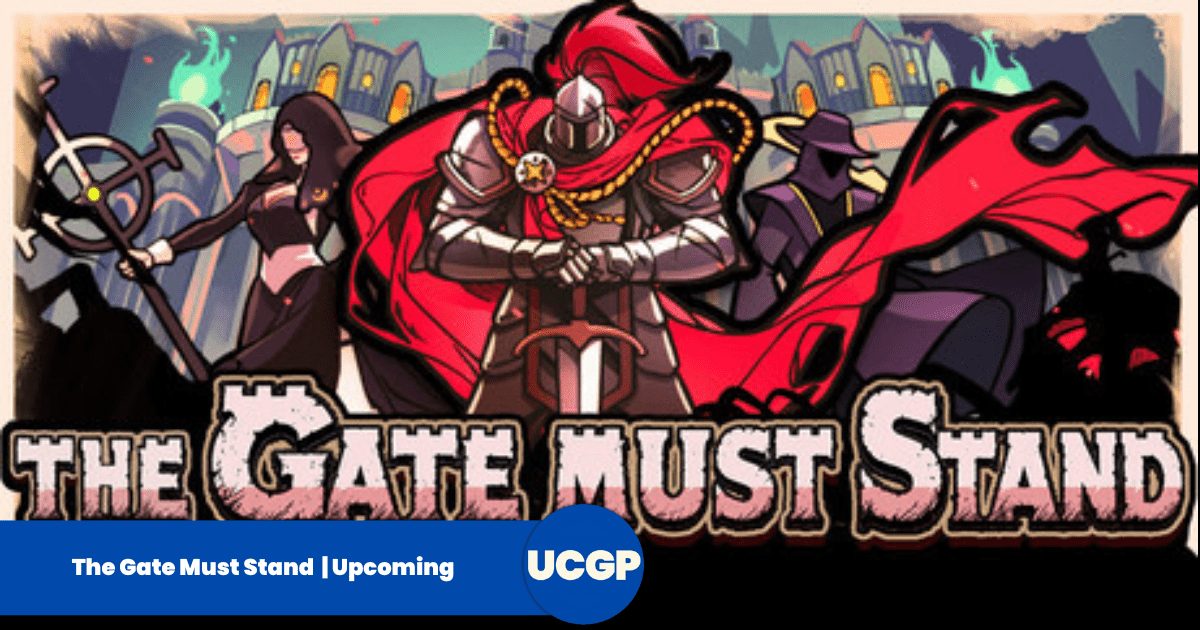
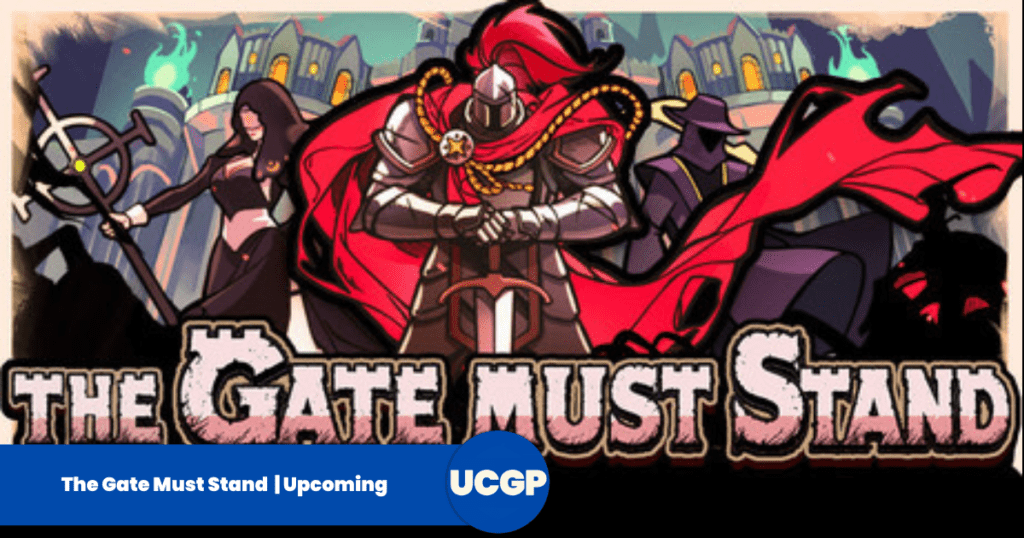
Developed by Senmu Studio and published by Gamersky Games alongside Yogscast Games, The Gate Must Stand is a dark fantasy roguelite tower defense game that places you directly in the chaos. You control a hero, fight through demon hordes in real time, command followers and defensive structures, manage resources, and make build decisions between waves that define how each run develops. The city of Belrak is the last place standing against a continent-wide demonic invasion, and defending its gate is the entire game’s premise and pressure point.
This guide covers everything relevant to the June 18, 2026 launch: the full gameplay breakdown, how the hero-driven combat changes the tower defense formula, what the roguelite progression looks like across 149 hero skills and 53 relics, system requirements, community reception from the demo period, and an honest assessment of who this game is built for.
Why “The Gate Must Stand” Is Getting Attention
The combination of Vampire Survivors-style action and tower defense in a dark fantasy setting is a formula that the indie strategy community has been curious about for a while. The Gate Must Stand is one of the more fully realized attempts at making it work as a cohesive game rather than a mechanical curiosity.
What separates it from straight vampire survivors comparisons is the tactical layer. You are not just surviving waves of enemies while passive upgrades do the work. You are actively thinking about where to place defensive structures, which followers to deploy, which skills to invest in, and how to position your hero during encounters. The decision density is higher than most games in either genre it is drawing from.
Yogscast Games, as a co-publisher, brings the game access to a creator network with significant reach in the indie gaming space. Yogscast’s community is large and genuinely engaged with exactly the kind of game The Gate Must Stand is. That audience exposure during the demo period contributed meaningfully to the game building awareness before launch.
The demo reception has been positive enough that the developers released updates addressing balance and optimization before the full launch, which shows a development team paying attention to feedback rather than treating the demo as a pure marketing exercise.
Game Overview
| Category | Details |
|---|---|
| Full Title | The Gate Must Stand |
| Developer | Senmu Studio |
| Publisher | Gamersky Games and Yogscast Games |
| Series | Original IP |
| Genre | Action, Strategy, Roguelite, Tower Defense |
| Game Type | Tower Defense / Action Roguelite / Real-Time Strategy Hybrid |
| Engine | Unity Engine |
| Official Community | Steam Community Hub and Official Discord |
Senmu Studio is the development team behind the game, with Gamersky Games and Yogscast Games handling publishing responsibilities. Yogscast Games has a track record of publishing indie titles that fit their creator network’s audience, and The Gate Must Stand sits squarely in that space: approachable for newcomers to the genre while offering depth for players who want to optimize builds across multiple runs.
This is a wholly original IP, so there are no franchise expectations pulling the design in predetermined directions. The game stands or falls entirely on what its hybrid formula delivers.
Confirmed Information
Everything officially confirmed for The Gate Must Stand heading into the June 18, 2026 launch:
- PC Steam release on June 18, 2026 worldwide (some regional storefronts display June 17 due to time zone differences)
- 4 playable heroes with distinct combat roles
- 149 hero skills across the full skill system
- 53 collectible relics that modify and enhance build options
- 13 boss encounters spread across the campaign
- 3 stages with 6 total maps
- 5 confirmed difficulty levels
- Real-time action combat with direct hero control
- Followers and defensive units deployed alongside hero combat
- Roguelite meta-progression system between runs
- Resource management and base-building elements
- Unity Engine confirmed
- Full controller support confirmed
- Steam demo available pre-launch
- Demo received major updates addressing optimization and balance based on community feedback
- Published by Gamersky Games and Yogscast Games
- No multiplayer confirmed
- No microtransactions confirmed
- Price not officially published as of this writing
Rumors and Unconfirmed Details
The Gate Must Stand is a focused indie release with a relatively clean information landscape. Remaining speculation:
- Console ports: No PlayStation, Xbox, or Nintendo Switch announcements have been made. Community interest in console versions exists, but no official response has been given.
- Co-op mode: Not confirmed. The community has requested it, but the developer has not addressed whether co-op is planned for a future update or beyond scope.
- Future expansions or additional heroes: The roguelite structure naturally invites expansion, but no post-launch content roadmap has been officially announced.
- Exact launch pricing: The game price was not officially confirmed in publicly available pre-launch materials. Check the Steam store page for confirmed regional pricing.
- Recommended PC specifications: Only minimum system requirements have been officially listed. Full recommended specs are not published.
Rumor Reliability: Low. These are largely community requests without any grounding in official developer statements. The developer Discord is active and worth following for any future announcements.
Confirmed vs. Rumored Table
| Confirmed | Rumored |
|---|---|
| PC Steam launch June 18, 2026 | Console versions |
| 4 playable heroes | Co-op multiplayer mode |
| 149 hero skills | Additional heroes post-launch |
| 53 relics | Future content expansions |
| 13 bosses | New stages or maps |
| 3 stages and 6 maps | Post-launch DLC |
| 5 difficulty levels | Expanded meta-progression |
| Full controller support | Online leaderboards |
| Demo available on Steam | Cross-platform save data |
| Unity Engine | Ultrawide display support |
Release Date and Timeline
The Gate Must Stand’s path to launch followed a trajectory common to indie games that use demo feedback as a genuine development tool.
Key timeline:
- 2025: Game publicly revealed on Steam with initial demo availability
- Early 2026: Game was originally expected to launch before settling on the June window
- Pre-launch period: Public demo available on Steam; developer ran playtest phases for community feedback
- Final demo update: Major demo update released focusing on gameplay balance, optimization, and bug fixes based on player feedback
- June 18, 2026: Full game launches worldwide on Steam
The slight regional date discrepancy of June 17 on some storefronts versus June 18 is a time-zone artifact rather than a genuine two-date release. The global launch is targeting the same moment across platforms; what a player’s local clock reads depends on their location.
The game was originally expected earlier in 2026, which means the team used additional development time to address the issues raised during the demo period. Games that delay for polish rather than scope typically deliver cleaner launches, and the updated demo version suggests the extra time was used productively.
The Gate Must Stand Trailer
Platform Availability
The Gate Must Stand is currently a PC-exclusive game available through Steam.
| Platform | Status |
|---|---|
| PC (Steam) | Launching June 18, 2026 |
| Epic Games Store | Not Confirmed |
| PlayStation 5 | Not Announced |
| Xbox Series X | S |
| Nintendo Switch | Not Announced |
| Mobile | No |
| Cloud Gaming | Not Confirmed |
| Controller Support | Full Controller Support Confirmed |
| Crossplay | Not Applicable |
| Cross-Progression | Not Confirmed |
Full controller support on a PC-exclusive game is a meaningful addition. Tower defense games with real-time action combat can work very well on controllers when the interface is designed for it, and the Steam Deck community in particular will appreciate that this has been considered. Official Steam Deck compatibility has not been confirmed, but the controller support listing is an encouraging sign.
Console availability remains unannounced. Given the game’s budget and the Unity Engine foundation, porting to consoles is technically feasible, but whether Senmu Studio has the resources or the publisher backing to pursue that is unclear.
Gameplay Deep Dive
The Gate Must Stand blends three distinct genre mechanics into a single session structure. Understanding how they fit together is the key to understanding what the game is asking of you.
The tower defense foundation gives you the familiar structure of incoming enemy waves that need to be managed through defensive positioning and resource investment. The roguelite layer gives those waves procedural variety and your character meaningful upgrade choices between encounters. The action RPG element puts your hero in the fight directly, turning passive base management into active participation in the chaos happening on screen.
The result is a game where no single session is purely about watching towers do work. You are making decisions and executing them simultaneously. That active involvement is what demo players have consistently cited as the feature that pulls the experience together.
Hero System and Build Variety
Four heroes are available at launch, each with a distinct combat role and set of skills that interact differently with the broader build system. Choosing a hero at the start of a run sets your fundamental combat approach. From that starting point, 149 hero skills and 53 relics create an enormous space of possible build combinations.
The skill count is meaningful here. Across runs with the same hero, you will rarely see the same skill selections presented in the same combinations. Roguelite skill selection is only interesting if the options are genuinely varied enough to create different strategic contexts, and 149 skills across 4 heroes suggests the decision space is substantial.
Relics add another layer on top of skills. Powerful artifacts that modify or amplify certain abilities can transform a run in directions that pure skill choices alone would not produce. Finding a relic that synergizes with the skill set you have been building is the kind of discovery moment that roguelite runs are built around.
Followers and Defensive Management
Alongside your hero’s direct combat, followers and defensive units are deployed to support the gate defense. Managing follower placement and capability alongside your own position in a fight creates the simultaneous decision-making that makes this feel like more than either tower defense or action roguelite alone.
Followers respond to AI direction rather than direct player control. The quality of that AI in terms of how intelligently followers position and respond during large-scale encounters is one of the factors that will determine whether the hybrid formula feels cohesive in extended sessions.
Wave Survival and Resource Management
Resource management connects the defensive building and upgrade systems to your combat approach. Choices about when to invest resources in defensive infrastructure versus hero upgrades create meaningful tension across a run. Early investment in defenses can ease mid-run waves. Heavy early investment in hero power can make the defense rely more heavily on your direct combat performance.
Five difficulty levels give the game range from accessible to challenging without locking content behind difficulty walls that frustrate players who are still learning the systems.
Multiplayer and Co-op
No multiplayer mode has been confirmed for The Gate Must Stand. The game is designed around single-player roguelite runs where your hero works alongside AI-controlled followers.
Co-op is the most frequently requested feature in community discussions, and given the genre comparisons to games like Orcs Must Die! 3, where co-op is a core feature, that request makes intuitive sense. The Gate Must Stand’s follower system does create a logical entry point for a future co-op mode where a second player could take control of a second hero alongside the primary.
Whether that arrives post-launch is not known. The developer has not responded publicly to the co-op requests with a specific commitment. Players who want to confirm the current status should check the Steam store page and developer Discord before purchasing specifically for co-op expectations.
Combat System
Combat in The Gate Must Stand is real-time and top-down with hack-and-slash mechanics for the hero’s direct engagement. You are not clicking to move units across a map. You are moving your hero through the battlefield and fighting enemies while your defensive systems handle the structural protection of the gate.
This is closer to how Orcs Must Die! handles the action-defense hybrid than how Vampire Survivors approaches it. Your hero’s positioning and moment-to-moment combat decisions matter significantly, not just the passive upgrade selection between waves. Getting overwhelmed in a fight because you did not manage hero positioning is a real failure state rather than a background simulation.
Thirteen boss encounters across the three stages create the escalating pressure that roguelite and tower defense games both rely on. Bosses in tower defense games work best when they require a different strategic response from regular waves rather than just being regular enemies with more health. Based on the variety visible in official footage, the boss design appears to follow that principle.
The dark fantasy setting gives the combat visual weight that lighter tone alternatives cannot match. Demon hordes pressing against Belrak’s gate under the kind of atmospheric lighting the game delivers in trailer footage creates a genuinely tense visual context for the gameplay.
Progression Systems
Progression in The Gate Must Stand runs on two timescales: within a single run and between runs through meta-progression.
Within a run, skill selections between waves and relic discoveries shape how your hero and followers develop. These decisions compound over the course of a full run, meaning early choices constrain and enable later ones in ways that experienced players learn to read better over time.
Between runs, the meta-progression system carries forward unlocks and upgrades that make future attempts start from a stronger foundation. This is the core retention mechanism for roguelite games: failed runs still contribute to progression, reducing the frustration of loss and keeping players invested across sessions that do not reach their conclusion.
149 skills across four heroes creates enough build space that players will still encounter new combinations across many hours of play. The relic system at 53 items adds a second axis of discovery that keeps individual runs feeling distinct.
The five difficulty levels serve as a progression ladder in their own right. Players who master the lower difficulties unlock the challenge of harder modes, which extends the game’s engagement ceiling without requiring new content to be developed.
Open World and Map Structure
The Gate Must Stand does not include open-world gameplay. The experience is structured around map-based runs across three stages containing six total maps. This focused structure suits the roguelite format well, since each map presents a specific defensive challenge rather than requiring you to navigate a large environment between encounters.
The three stages provide different environmental and thematic contexts that change how the demon invasion feels across the campaign. Moving from one stage to the next represents progression through the story of Belrak’s defense rather than geographic exploration.
The absence of open world elements is appropriate here. Games that try to combine roguelite run structure with open-world navigation often find the two formats in tension with each other. A focused map structure keeps the decision-making clean.
Character and Build Customization
The Gate Must Stand does not feature cosmetic character creation in the traditional sense. Character identity comes through build choices rather than visual customization of appearance.
Four heroes each represent distinct gameplay approaches at the fundamental level. From that starting point, the combination of 149 hero skills and 53 relics effectively creates a deep customization system for how your hero plays within a run. Two players who both choose the same hero can have dramatically different combat experiences if their skill selections and relic finds diverge.
This build-based identity system is well suited to the roguelite format, where the excitement of character customization lives in the moment of a skill choice or relic discovery rather than in pre-game character creation menus.
Story and Setting
The Gate Must Stand’s narrative is focused and direct. The continent has fallen to demonic invasion. Belrak is the last surviving city. You are defending its gate. The stakes are clear, the setting is dark and pressured, and the game does not ask you to engage with elaborate lore before understanding what you are fighting for.
This kind of concentrated setting works well for a game where the primary engagement is mechanical and strategic. Tower defense and roguelite games do not typically need extensive narrative scaffolding. The setting provides enough context to make the combat feel meaningful without interrupting the gameplay loop to deliver it.
The dark fantasy visual language, demon hordes, medieval defensive architecture, and atmospheric lighting create a consistent tone that reinforces the sense of desperate last-stand defense that the premise describes. When the game looks like what the story is asking you to feel, the presentation and the mechanics work together rather than against each other.
Comparison With Similar Games
| Feature | The Gate Must Stand | Vampire Survivors | Orcs Must Die! 3 | They Are Billions |
|---|---|---|---|---|
| Hero Control | Direct Real-Time | Passive / Auto | Direct Real-Time | Strategic Command |
| Tower Defense | Yes | No | Yes | Yes |
| Roguelite | Yes | Yes | Limited | No |
| Co-op | Not Confirmed | No | Yes | No |
| Setting | Dark Fantasy | Horror Comedy | Fantasy | Steampunk Post-Apocalypse |
| Platform | PC | PC, Console, Mobile | PC, Console | PC, Console |
| Price Range | Not Confirmed | Low | Mid | Mid |
| Single-Player Focus | Yes | Yes | Partial | Yes |
| Boss Variety | 13 | High | High | Limited |
Versus Vampire Survivors: The most common initial comparison, but the games diverge significantly in execution. Vampire Survivors is built around passive survival with automatic attack systems that grow through upgrades. The Gate Must Stand requires active combat control and tactical thinking about defensive placement simultaneously. They share a roguelite structure and the concept of surviving escalating waves, but the skill expression required is fundamentally different.
Versus Orcs Must Die! 3: This is the closer functional comparison. Both games place your character directly in the action alongside placed defenses, both have boss encounters, and both operate in fantasy settings. Orcs Must Die! 3 has established co-op as a core feature. The Gate Must Stand’s single-player focus means solo players get more tailored balance. Players who specifically want co-op should factor in that difference.
Versus They Are Billions: They Are Billions is a real-time strategy game about base survival with a similar survival-colony premise but no direct hero control. The Gate Must Stand is more immediately action-oriented. Players who want deeper base construction will find They Are Billions offers more on that side. Players who want to be in the fight personally will prefer The Gate Must Stand’s approach.
After following the tower defense genre through multiple evolution cycles, the games that successfully blend direct action with base management tend to be the ones that make both halves feel necessary rather than one existing as decoration for the other. The Gate Must Stand appears to understand that balance, though the full campaign will be the real test.
Community Reactions
Community sentiment around The Gate Must Stand has been positive, particularly among players who spent time with the Steam demo.
The demo reception highlighted the hybrid formula as the game’s strongest selling point. Players who came in expecting a pure tower defense game found something more engaging because of the hero combat involvement. Players who came from the Vampire Survivors side found the tower defense mechanics added strategic depth that the passive auto-attack format does not provide.
Reddit discussions within roguelite and strategy communities have been growing as the launch approached. The game had limited initial awareness but has been steadily picked up by indie game discovery channels and strategy-focused content creators. The Yogscast connection brought it to an audience that is receptive to exactly this kind of game.
YouTube coverage during the demo period focused on gameplay impressions and comparisons to the games it most resembles. The boss encounter footage has been the most shared content, which suggests the 13 boss varieties are landing as an interesting feature to showcase.
Discord activity through the official developer community has been described positively by players who engaged with it. Developer presence in their own community during the pre-launch period is a good sign for how post-launch support might look.
Community concerns center on three areas: whether the content volume at launch (3 stages, 6 maps) is sufficient for the price once that is confirmed, whether difficulty balancing holds across all five levels, and whether performance remains stable during the largest enemy-count encounters the game can generate.
Pros and Cons
Pros
- Hybrid formula combining hero action combat with tower defense creates a distinct play style not common in either genre
- 149 hero skills and 53 relics create a genuinely large build space for roguelite replayability
- 13 boss encounters across three stages provide meaningful escalating challenge
- Five difficulty levels cater to a range of skill levels without locking content
- Full controller support confirmed, making Steam Deck use plausible
- Demo available on Steam so players can verify the game suits their style before buying
- Developer actively improved the game through demo feedback before launch
- A dark fantasy setting gives the combat genuine atmosphere and visual identity
- Published by Yogscast Games, bringing creator community exposure
Cons
- No multiplayer or co-op confirmed despite community demand
- Only 3 stages and 6 maps at launch, which may feel limited for players wanting longer campaigns
- Price not publicly confirmed ahead of launch
- Console versions not announced
- Recommended PC specifications not officially published
- Long-term content roadmap not detailed by developer
- The game originated from a smaller studio with limited track record
Who Should Play The Gate Must Stand
Strong fit for:
Players who enjoy Vampire Survivors-style roguelite structure but want more tactical engagement and decision-making between waves. Tower defense fans who find passive tower placement games less satisfying than they used to and want to be in the fight personally. Solo players looking for a replayable dark fantasy strategy experience with genuine build variety. Yogscast community members looking for an indie title that fits the content they already watch.
Might want to wait if:
Co-op with friends is a primary reason you are looking at this type of game. You prefer content-heavy strategy games with large map counts at launch. You want confirmed pricing before making a purchase decision. You are specifically looking for a story-rich RPG experience alongside the strategy mechanics.
System Requirements
Official minimum PC system requirements for The Gate Must Stand have been listed, though the storage figure shown on Steam (2MB) is clearly a placeholder and does not reflect the actual game size. Recommended specifications have not been officially published. The estimates below for recommended tier and storage are based on the Unity Engine foundation and comparable indie roguelite releases.
| Minimum (Official) | Recommended (Estimated) | |
|---|---|---|
| OS | Windows 7 / Windows 10 | Windows 10 / 11 64-bit |
| CPU | 2.0 GHz Processor | Intel Core i5 6th Gen or Ryzen 5 1600 |
| GPU | 1GB VRAM, OpenGL 3.0+ | NVIDIA GTX 1060 or AMD RX 580 |
| RAM | Not Specified in Minimum | 8 to 16GB |
| Storage | 2MB listed (placeholder) | Estimated 2 to 5GB actual |
| Ray Tracing | No | No |
| Controller | Full Support Confirmed | Full Support Confirmed |
| DLSS / FSR | Not Confirmed | Not Confirmed |
The minimum specifications are notably accessible. A 2.0 GHz processor and a GPU supporting OpenGL 3.0 with 1GB VRAM describes hardware from over a decade ago. Unity-based dark fantasy strategy games typically run well on modest hardware, and these minimums suggest Senmu Studio has optimized for a wide range of PC configurations. The storage placeholder is worth noting specifically: the actual installed size will be higher than 2MB. Check the Steam store page closer to launch for an updated and accurate file size.
Expert Predictions
Looking at The Gate Must Stand’s position in the indie roguelite strategy space and what the demo period revealed:
The launch will land positively among the Vampire Survivors and tower defense communities that have been watching the game develop. This is not a game aimed at mass-market audiences. It is targeting a specific player type and appears to understand that player type well based on the design decisions visible through the demo.
Content volume at launch will be the central conversation in early reviews. Three stages and six maps are a reasonable foundation for a roguelite where the replayability comes from build variety rather than map diversity. Whether players feel that volume justifies the price depends on how the roguelite loop sustains engagement. Games like Slay the Spire launched with limited content and built massive communities because the core loop was compelling enough to carry repeated play. The Gate Must Stand needs the same to be true of its run variety.
A co-op update post-launch seems probable but not certain. The request exists, and the game’s structure is not incompatible with a second hero being added to the same run. Whether Senmu Studio has the development resources to add that without disrupting balance is the practical question.
Console announcements in the period after a positive PC launch are plausible but purely speculative at this point. The Unity Engine foundation makes porting feasible technically.
Yogscast creator coverage at launch will determine how broadly the game reaches beyond the players already watching it during the demo period. That community exposure is one of the most tangible marketing advantages the publisher partnership provides.
Trailer and Media Analysis
The Gate Must Stand’s official trailers focus on what makes the game visually distinct within its genre: the sheer scale of demon hordes pressing against Belrak’s gate and the chaos of hero combat alongside defensive structures happening simultaneously.
The dark fantasy visual style reads clearly in motion. Enemy hordes have density that communicates the genuine threat of the waves, and the hero combat animations are fast enough to feel satisfying without becoming visually unclear in large-scale encounters.
Boss encounter footage is the most distinctive content in official media. The scale difference between regular waves and the thirteen bosses communicates the challenge escalation that roguelite games depend on, and seeing the boss visual designs reinforces that the encounter variety extends beyond simple damage number increases.
The improvements visible between the initial demo and the updated version have also generated community comparison content, showing concretely how the balance and visual clarity changes landed. That kind of evidence of developer responsiveness to feedback is compelling in the pre-launch period.
The Steam screenshots covering fourteen-plus images show the range of encounters from early-stage content through late-game encounters and boss battles. Players who want to set accurate visual expectations before buying have enough reference material available to do so.
FAQ Section
What is the release date for The Gate Must Stand? The Gate Must Stand launches on June 18, 2026 on PC via Steam. Some regional storefronts may display June 17 due to time zone differences, but the global launch is targeting the same moment worldwide.
Is The Gate Must Stand coming to consoles? No console versions have been announced. The game is currently a PC-exclusive release through Steam. Community interest in console ports exists, but no official response has been given by the developer.
Does The Gate Must Stand have multiplayer or co-op? No multiplayer or co-op mode has been confirmed. The game is designed as a single-player roguelite tower defense experience. Co-op is the most frequently requested feature from the community.
Is there a demo available for The Gate Must Stand? Yes. A playable demo is available on Steam. The demo received a major update before the full launch addressing gameplay balance and optimization based on community feedback.
What type of game is The Gate Must Stand? The Gate Must Stand is a dark fantasy action roguelite tower defense hybrid. Players directly control a hero in real-time combat while also managing followers, defensive units, and base resources against increasingly powerful demon waves.
Who developed The Gate Must Stand? The Gate Must Stand was developed by Senmu Studio and is co-published by Gamersky Games and Yogscast Games.
What are the PC requirements for The Gate Must Stand? Minimum requirements include Windows 7 or Windows 10, a 2.0 GHz processor, and a GPU with 1GB VRAM supporting OpenGL 3.0 or higher. Recommended specifications have not been officially published. Note that the 2MB storage figure currently listed is a placeholder and does not reflect the actual game size.
Is The Gate Must Stand a roguelite game? Yes. The Gate Must Stand features full roguelite progression including procedurally varied skill selections between waves, collectible relics that modify runs, meta-progression between attempts, and five difficulty levels. Each run developprogression,ly based on the choices made during play.
Final Verdict
The Gate Must Stand is a focused, well-considered indie release that earns its place in the increasingly competitive action roguelite space by committing to something specific and doing it well. The hybrid formula of direct hero combat alongside tower defense wave management is not new territory, but the depth Senmu Studio has built into the system through 149 skills, 53 relics, 13 bosses, and five difficulty levels suggests a team that understood the replayability demands of the roguelite format before building around it.
The demo period was used well. The feedback responsiveness visible in the updated demo and the optimization work completed before launch reflect the kind of development culture that produces better post-launch experiences than studios that go quiet between announcement and ship.
The main limitations heading into launch are honest ones: six maps is a conservative content footprint, co-op remains unconfirmed despite strong community desire for it, and the price is not yet publicly known. These are factors worth weighing against the roguelite replayability the build system offers.
If the core loop holds up across repeated runs at the quality the demo suggests, The Gate Must Stand has what it needs to build a dedicated community. Roguelite games live or die on how satisfying the loop feels across dozens of attempts, and the combination of hero combat depth and tower placement strategy creates enough decision variety to support that.
Try the Steam demo first if you have not already. The save data does not transfer, but the demo gives you a clear sense of whether this formula clicks for you before the full purchase.
Watch the developer Discord and Steam page for any co-op announcements and post-launch patch notes. This is a game worth keeping on your radar.
One response to “The Gate Must Stand (2026): Release Date & PC Strategy Guide”
[…] The Gate Must Stand (2026): Release Date & PC Strategy GuideJune 17, 2026 […]